8 THINGS YOU SHOULD THINK TWICE ABOUT PUTTING IN THE DISHWASHER
The dishwasher can save a huge amount of time—but not everything in your kitchen belongs inside it.
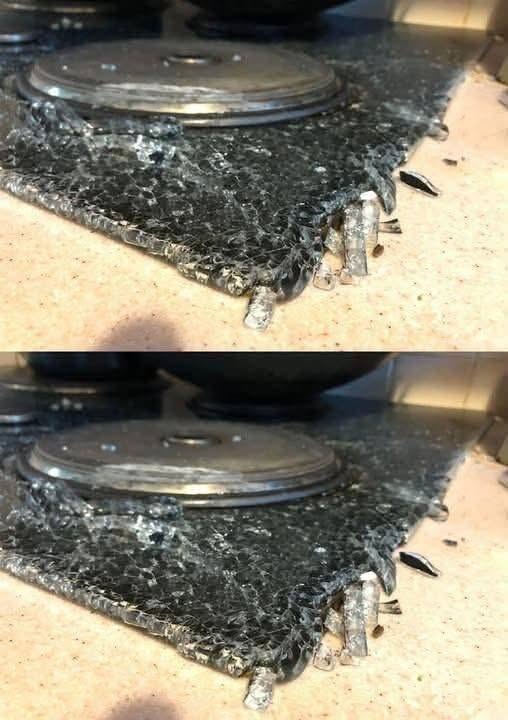
The combination of hot water, strong detergent, water pressure and heated drying can damage certain materials. And the broken glass shown in the image is a good reminder that some items can fail dramatically during a wash cycle.
1️⃣ Wooden Cutting Boards & Utensils 🌳
Wood can absorb water and heat, causing it to warp, crack or lose its finish.
Wooden spoons, cutting boards and utensils with wooden handles are generally better washed by hand.
2️⃣ Sharp Kitchen Knives 🔪
Even if a knife survives the dishwasher, repeated washing can dull or nick the blade.
Sharp knives can also damage dishwasher racks, while some hollow-handled knives use adhesives that may loosen with heat.
Hand washing is the safer choice.
3️⃣ Cast-Iron Cookware 🥘
Cast iron and dishwashers are a bad combination.
The detergent and hot water can remove the seasoning that protects the iron, while prolonged exposure to water can encourage rust.
Wash cast iron by hand and dry it promptly.
4️⃣ Non-Stick Pans
The combination of heat, detergent and repeated washing can wear down or damage some non-stick coatings.
Always follow the cookware manufacturer’s instructions. If it says hand wash, don’t put it in the dishwasher.
5️⃣ Crystal & Delicate Glassware 🥂
Delicate crystal and certain fine glassware can be damaged by heat, detergent and the movement inside the dishwasher.
Repeated exposure can cause etching, which may appear as a cloudy or frosted surface.
Everyday sturdy drinking glasses are generally different and are often dishwasher-safe.
6️⃣ Copper & Certain Decorative Metals
Copper cookware can become discolored or develop surface damage in the dishwasher.
Other metals such as brass, bronze and pewter can also lose their finish or become discolored.
If an item is valuable or decorative, hand washing is usually the safer choice.
7️⃣ Thin or Disposable Plastic 🥡
Not all plastic is created equal.
Some thin plastics can warp or melt, especially during high-temperature or heated-dry cycles.
If a plastic container is marked dishwasher-safe, follow the manufacturer’s instructions. When in doubt, hand wash it.
8️⃣ Insulated Travel Mugs ☕
Those insulated cups and travel mugs may look tough, but the heat and water can damage their seals or insulation.
Some are dishwasher-safe, while others specifically require hand washing—so check the manufacturer’s instructions before putting one inside.
🧠 THE BIGGEST RULE: CHECK THE LABEL
There isn’t one universal rule saying that every item made from a particular material is safe or unsafe.
A manufacturer’s “dishwasher safe” instructions should take priority.
For example, some modern cookware and plastics are specifically designed for dishwasher use, while similar-looking products may not be.
And if something is dishwasher-safe, loading it correctly still matters. Don’t block the spray arms, overload the racks, or allow delicate items to knock against one another.
🚨 And What About the Broken Glass in the Picture?
The image shows what appears to be shattered glass inside a dishwasher.
However, the photograph alone doesn’t establish exactly what caused it. Glass can break because of impact, thermal stress, an existing crack or other circumstances.
So don’t assume that simply putting one particular glass in the dishwasher will automatically cause it to explode.
✅ THE BOTTOM LINE
Before putting something in the dishwasher, ask:
“Can this material handle heat, strong detergent and high-pressure water?”
If you’re not sure, check the manufacturer’s instructions or wash it by hand.
A few extra minutes at the sink can save you a broken pan, ruined knife—or a dishwasher full of shattered glass. 😳🍽️
Which item on this list have you been putting in the dishwasher for years? 👀