Why Rescuing Someone Trapped in a Narrow Cave Can Be So Difficult
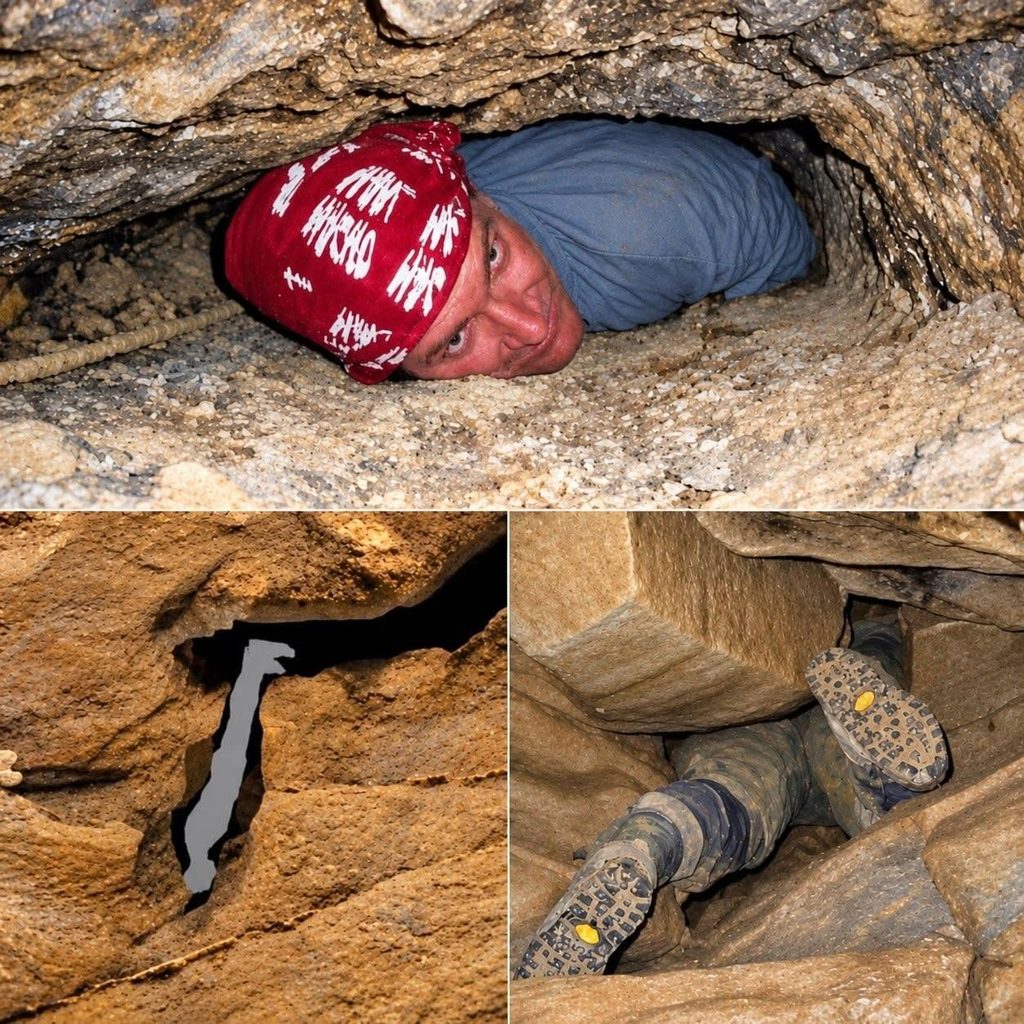
A series of photographs showing a person squeezed into a narrow rocky passage has captured attention online. The accompanying caption claims that rescuers found the person and attempted to help, but it does not provide the location, date, or outcome of the incident.
Although the specific story remains unverified, the images illustrate a real challenge faced by cave rescue teams: removing someone safely from a space that may be barely wide enough for a person to crawl through.
Why Can Someone Become Trapped in a Cave?
Caves contain passages of different shapes and sizes. Some are spacious enough to walk through, while others require explorers to crawl, turn sideways, or move through extremely tight gaps.
A person can become stuck when a passage narrows unexpectedly, when their body position makes it difficult to reverse direction, or when exhaustion, injury, or panic makes movement more difficult.
Even experienced cavers can encounter unexpected obstacles underground. The British Cave Rescue Council identifies physically restrictive passages, falls, exhaustion, rockfalls, and flooding among the situations that can require a rescue. <Cite refs={[“turn367905search0″,”turn367905search1”]}/>
Why Is a Rescue Operation So Complicated?
Rescuing someone from a narrow cave is not as simple as pulling them backward. Rescue teams must consider several factors before attempting to move the person.
1. Limited space
Rescuers may struggle to reach the trapped person, position themselves safely, or carry the equipment needed to provide assistance.
2. Risk of further injury
Pulling or twisting someone without an appropriate plan can worsen an injury. Rescue teams must assess the person’s condition and determine how to move them as safely as possible.
3. Difficult access and communication
Caves may contain winding passages, vertical drops, unstable rocks, and areas where communication with the surface is difficult.
4. The need for specialized equipment
Depending on the situation, trained teams may need harnesses, ropes, flexible stretchers, medical supplies, and specialized lighting. Equipment that works in an open area may be impossible to maneuver through a tight passage. <Cite refs={[“turn367905search1″,”turn367905search4”]}/>
What Should Happen When Someone Becomes Trapped?
The priority is to keep the person safe while a qualified rescue team assesses the situation. Rescuers may need to stabilize the person, evaluate injuries, and plan a careful extraction based on the cave’s layout.
Untrained people should not attempt a dangerous underground rescue on their own. Entering a confined space without suitable training and equipment can put additional lives at risk. If an incident occurs, emergency services or a recognized cave rescue organization should be contacted.
What Do We Know About the Person in This Photograph?
The supplied image shows a person inside a very tight rocky passage, but it does not establish the person’s identity, the cave’s location, or whether the person was successfully rescued.
The caption’s claim that rescuers tried to help but something went wrong cannot be confirmed from the photographs alone. Without a reliable news report or an official rescue account, the outcome should not be guessed.
Final Thoughts
Cave exploration can be an extraordinary experience, but narrow passages and difficult terrain can turn a minor problem into a complex emergency. Specialized rescue teams train for these conditions because safely removing someone from underground can require considerable planning, equipment, and coordination.
Have you ever explored a cave or seen a cave rescue story? Share your experience in the comments. If you know the location or have the original report connected to these photographs, that information could help establish what actually happened.