Why Don’t Planes Cross the Atlantic During the Day? The Truth Behind This Viral Question
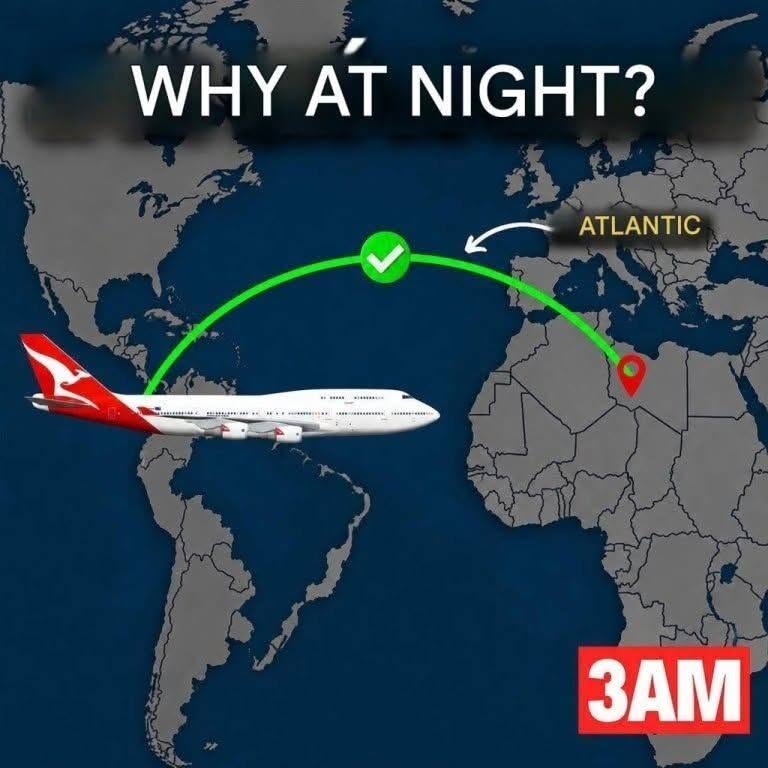
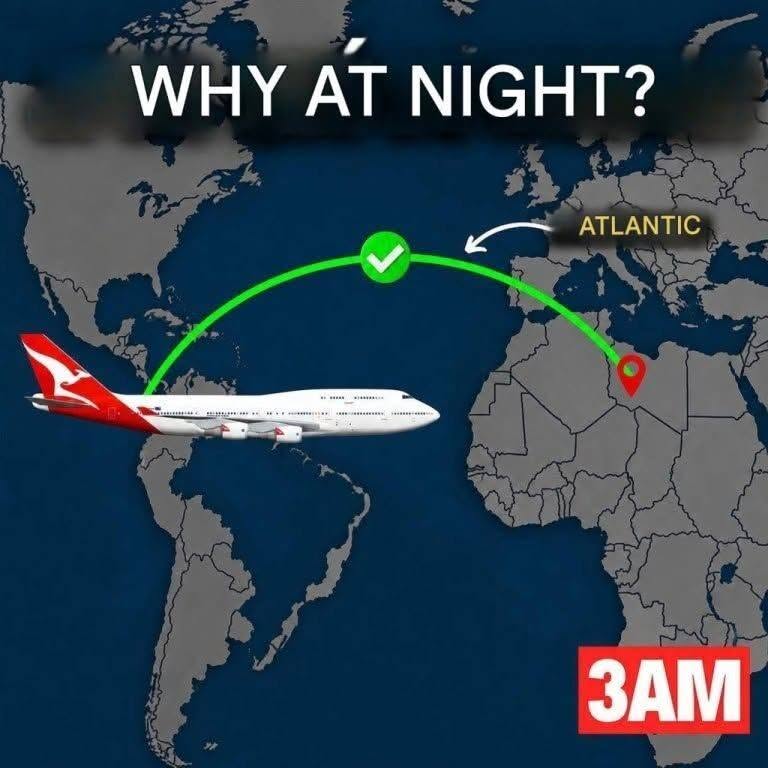
You may have seen viral posts claiming that airplanes do not cross the Atlantic Ocean during the day. The image often shows a flight route from South America toward Europe and asks: “Why at night?”
But there is an important fact that may surprise you:
✈️ Planes Do Cross the Atlantic During the Day
There is no rule preventing airplanes from flying across the Atlantic during daylight hours.
Every day, numerous commercial flights cross the Atlantic in both directions. Depending on the route, season, departure time, and time zones, some passengers experience daylight for much of the journey while others fly mostly at night.
So why does it sometimes seem as though many flights cross at night?
🌍 The Main Reason: Airline Scheduling
One major reason is flight scheduling and time zones.
For example, many eastbound flights from North America to Europe leave in the evening and arrive the following morning. This schedule is convenient because passengers can:
Depart after work
Sleep during part of the flight
Arrive in Europe in the morning
Continue with connecting flights or business activities
Meanwhile, westbound flights often leave Europe during the day and arrive in North America later the same day because of the time difference.
💨 Winds Also Matter
Airlines carefully plan routes based on weather and wind conditions.
High-altitude winds, especially the jet stream, can significantly affect flight time and fuel consumption.
A strong tailwind can help an aircraft travel faster and use less fuel, while a strong headwind can increase flight time.
That is why an eastbound Atlantic crossing can sometimes be considerably faster than a westbound journey.
🛫 Safety Is Not the Reason
Modern aircraft are designed and certified to operate safely during both:
☀️ Daytime 🌙 Nighttime
Pilots regularly fly long-haul routes at all hours of the day and night.
Navigation systems, radar, satellite technology, air traffic control, and onboard instruments allow aircraft to operate safely even when pilots cannot see the ground or ocean below.
🌊 Do Planes Fly Directly Across the Ocean?
Yes, but their exact route is not always a perfectly straight line.
Flight paths may change depending on:
Weather conditions
Winds
Air traffic
Airspace restrictions
Emergency diversion airports
Fuel efficiency
Aircraft flying over the North Atlantic often follow organized routes that are adjusted according to conditions.
The Bottom Line
❌ It is a myth that planes don’t cross the Atlantic during the day.
✅ Aircraft cross the Atlantic day and night.
The reason some long-haul flights are scheduled overnight is mostly connected to passenger convenience, airline schedules, and time zones, while winds and weather can influence the exact route and flight duration.
So the next time you see this viral question, remember: the Atlantic is crossed by airplanes around the clock! ✈️🌎