“Which Couple is Happiest?” Personality Test: What Your Choice Actually Reveals
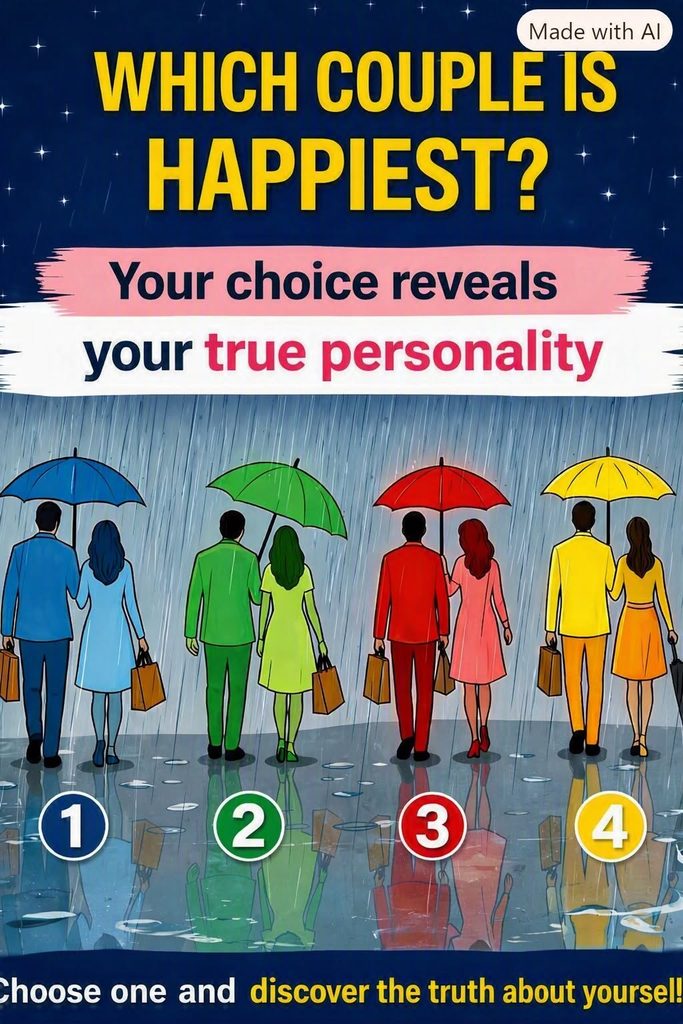
Visual quizzes and personality tests based on image selection are immensely popular across social media platforms. The viral image shows four couples walking in the rain under different colored umbrellas (blue, green, red, and yellow), paired with the catchy headline: “WHICH COUPLE IS HAPPIEST? Your choice reveals your true personality.”
These social media posts claim that choosing a specific couple will unlock hidden insights about your psychology, love life, or core character traits.
Here is the psychological truth behind AI-generated visual tests, what color choices actually represent, and how to evaluate viral quizzes with a critical eye:
1. The Problem: The Allure of AI-Generated Personality Quizzes
Visual personality tests generate massive online engagement, but they rely on well-known psychological and marketing tricks:
The Barnum/Forer Effect: The psychological phenomenon where individuals believe that vague, universally applicable personality descriptions are tailored specifically to them.
AI-Generated Content: As indicated by the “Made with AI” badge at the top of the image, this graphic is a digital creation designed specifically to catch your eye and generate clicks, not a clinical diagnostic tool.
The Desire for Self-Validation: People naturally seek answers about their relationships, preferences, and personal identities through colorful, interactive media.
2. Explanation: How These Tests Work and the Scientific Reality
From a cognitive science and color psychology standpoint, choosing a specific couple reflects basic aesthetic and emotional associations:
Color Psychology Associations:
Blue (Couple 1): Psychologically associated with calmness, stability, trust, and loyalty.
Green (Couple 2): Connected to growth, harmony, balance, and renewal.
Red (Couple 3): Symbolizes passion, energy, intensity, and romantic romance.
Yellow (Couple 4): Represents optimism, warmth, joy, and open communication.
Lack of Scientific Validity: Selecting a color or a silhouette does not measure the actual health of a real-life relationship or your underlying psychological profile. It simply reflects a temporary visual or emotional preference.
Algorithm Manipulation: Captions such as “Check the first comment” or “Answer in the comments” are designed solely to drive comment section activity and boost algorithmic reach.
3. Advice & Steps: How to Approach Online Tests Wisely
To enjoy visual quizzes without falling for psychological misinformation, follow these practical tips:
1. Treat Online Quizzes purely as Entertainment
Have fun exploring the symbolism behind colors and imagery, but do not take the results as literal psychological truths or relationship advice.
2. Seek Scientifically Validated Assessments
If you want genuine insights into your personality, look into validated psychometric frameworks (such as the Big Five / OCEAN model) administered by qualified mental health professionals.
3. Reflect on Your Personal Preferences
Use your choice as a moment for self-reflection: Ask yourself why you were drawn to a specific color—whether you are currently seeking peace (blue), passion (red), or optimism (yellow)—to gain meaningful personal insight.
Disclaimer & Safety Guidelines
This article is provided for general informational and digital literacy educational purposes. Social media personality tests and visual quizzes are created strictly for entertainment. They are not a substitute for professional psychological evaluations, counseling, or relationship therapy.