Why Do Towels Develop Orange Stains That Won’t Wash Out?
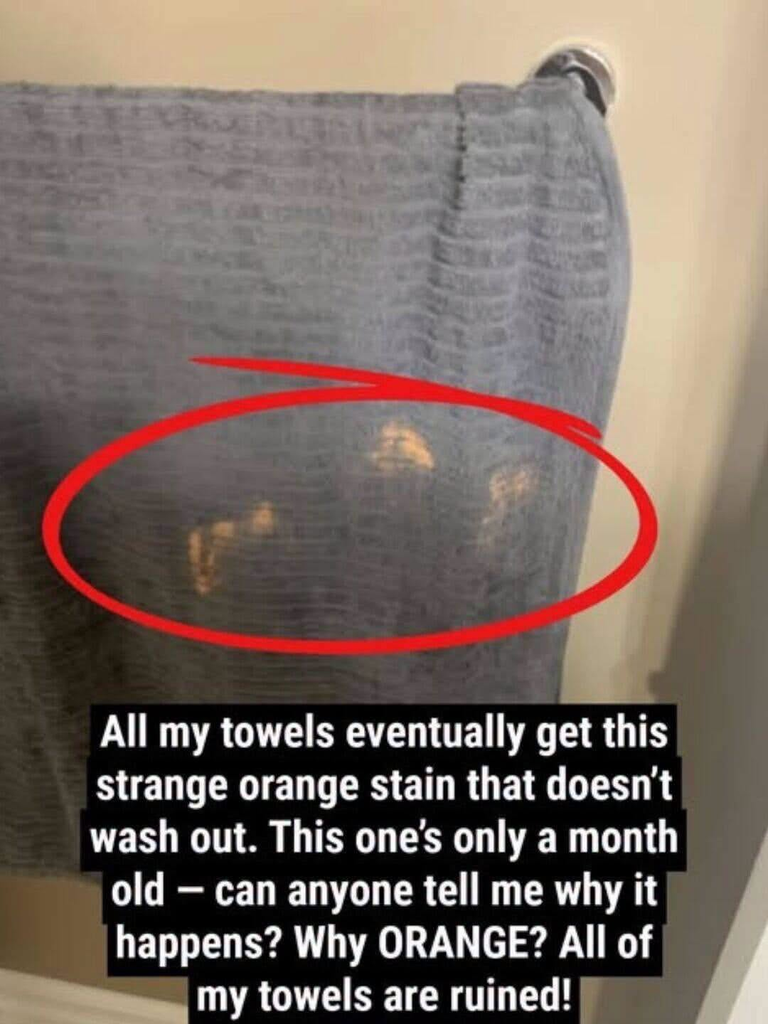
Have you ever bought new towels, used them for only a few weeks, and then noticed mysterious orange stains that seem impossible to remove? If the same marks keep appearing on different towels, the cause may be something you use every day rather than a problem with the fabric itself.
Orange or rusty-colored patches can develop for several reasons, including skincare products, mineral deposits in water, rust, and certain cleaning chemicals. Understanding where the stains come from is the first step toward preventing them.
1. Skincare Products May Be the Cause
One of the first things to check is your skincare routine, particularly if the stains appear on towels used after washing your face.
Some acne treatments contain benzoyl peroxide, an ingredient that can bleach fabrics. When it comes into contact with colored towels, it may leave faded, yellowish, or orange-looking patches that cannot be removed through ordinary washing.
Other skincare products, including certain cosmetics and self-tanning products, may leave colored residues on fabric.
How to prevent these stains
Check the ingredients of acne creams, gels, and facial cleansers.
Allow skincare products to dry fully before using colored towels.
Consider using white towels for your face if you use products known to bleach fabric.
Wash towels according to their care labels after use.
If the marks look like areas where the towel’s original color has disappeared rather than a substance sitting on the fibers, bleaching from a skincare product is a possibility.
2. Iron in the Water Can Leave Rust-Colored Marks
Another possible cause is iron in your household water supply.
Water containing elevated levels of iron can leave yellow, orange, or reddish-brown stains on fabrics. These marks may become more noticeable after repeated washing, especially if the water contains enough iron to deposit residue on the towels.
Rust from aging pipes, plumbing fixtures, or other metal components may also contribute to orange discoloration.
Signs that water may be responsible
Consider whether:
Several towels develop similar stains.
Other laundry shows yellowish or rusty marks.
Orange discoloration appears around sinks, bathtubs, or plumbing fixtures.
The problem began after plumbing work or a change in the water supply.
If you suspect iron in the water, a suitable water test can help determine whether it is present. A plumber or water-treatment professional can advise you about the appropriate solution.
3. Cleaning Products Can Discolor Towels
Laundry detergents, stain removers, bleach, and other cleaning products can affect fabric dyes when used incorrectly or in unsuitable combinations.
Chlorine bleach, for example, can cause colored towels to fade or develop unexpected discoloration. Concentrated cleaning products may also damage fibers if they are applied directly to fabric.
If the stains appeared after changing detergent, using a new cleaning product, or increasing the amount of bleach, review the product instructions and the towel’s care label.
Never mix chlorine bleach with vinegar, ammonia, or other cleaning products. Dangerous fumes can result.
4. Body Products and Cosmetics May Transfer to Fabric
Some orange or brown marks come from substances transferred during normal use rather than from the washing machine.
Possible sources include makeup, self-tanning products, hair products, and certain body-care formulations. These substances may contain pigments or ingredients that cling to textile fibers.
To investigate, consider where the marks appear. Stains concentrated around the face, hairline, or hands may suggest contact with a particular product, although their location alone cannot confirm the cause.
If you recently introduced a new product, try keeping it away from the affected towels and observe whether the problem continues.
5. Why Won’t the Orange Stains Wash Out?
The difficulty of removing a stain depends on what caused it.
Some residues remain attached to the fibers after ordinary washing. Mineral deposits, for example, may require a fabric-safe treatment specifically suited to the type of deposit.
Bleaching is different. If a chemical has removed the dye from a colored towel, washing cannot restore the original color. The fabric may be clean even though the faded patch remains visible.
This distinction is important because repeatedly washing a discolored towel will not necessarily solve the problem.
How to Prevent Orange Stains on Your Towels
A few practical steps can help reduce the likelihood of further discoloration.
Check your skincare products. Look for ingredients such as benzoyl peroxide that are known to bleach fabrics.
Review your water supply. If multiple towels and other laundry develop rusty marks, consider testing the water for iron.
Use laundry products correctly. Follow the manufacturer’s instructions and avoid applying concentrated chemicals directly to colored towels.
Separate affected items. Keep towels showing unusual discoloration separate until you have identified the likely cause.
Follow fabric care instructions. Use an appropriate washing temperature and a suitable detergent. Test any stain remover on an inconspicuous area first.
Avoid aggressive treatments. Do not combine cleaning chemicals or use strong stain removers without checking that they are safe for the fabric.
Final Thoughts
Orange stains on towels can be frustrating, especially when they appear on recently purchased items. However, they do not necessarily mean that your washing machine is faulty or that your towels are permanently ruined.
Skincare products containing benzoyl peroxide, iron in the water, rust, cleaning chemicals, and cosmetic residues are all possible explanations. The most useful clue is whether the marks resemble colored deposits or faded areas where the original dye has disappeared.
Identifying the source before choosing a cleaning method can save time, protect your towels, and prevent the same problem from happening again.
Have your towels developed mysterious orange stains? Consider whether you have recently changed your skincare products, laundry routine, or water supply. Those details may help you narrow down the cause.