What Is Normal Blood Pressure at Every Age? A Practical Guide
Blood pressure is an important indicator of cardiovascular health. It measures the force of blood against the walls of the arteries, and understanding your readings can help you recognize when you may need medical advice.
You may have seen claims online that 120/80 mmHg is no longer considered normal. The reality is more nuanced: blood pressure categories depend on the medical guideline being used, and a person’s age is only one part of the picture.
What Do the Two Blood Pressure Numbers Mean?
A reading such as 120/80 mmHg contains two measurements:
Systolic pressure (the top number): The pressure in your arteries when your heart contracts.
Diastolic pressure (the bottom number): The pressure when your heart relaxes between beats.
Both numbers matter. A reading should be interpreted in context rather than judged by just one number.
Blood Pressure Ranges for Adults
Under current American Heart Association adult categories, blood pressure is classified as follows:
Category
Systolic (top)
Diastolic (bottom)
Normal
Below 120
Below 80
Elevated
120–129
Below 80
High blood pressure, Stage 1
130–139
Or 80–89
High blood pressure, Stage 2
140 or higher
Or 90 or higher
Severely high
Higher than 180
And/or higher than 120
These categories apply to adults. When either number falls into a higher category, that may affect the overall classification. A healthcare professional should confirm a diagnosis using appropriate measurements and clinical assessment.
Does Normal Blood Pressure Change With Age?
For adults, the categories above generally remain the same across age groups. Older adults may have different health considerations, medication needs, and treatment targets, but there is no single universally accepted chart assigning a different normal blood pressure to every adult age.
Children are different. For children younger than 13, healthcare professionals interpret blood pressure using age, sex, and height percentiles. Adolescents aged 13 and older are generally assessed using adult-style thresholds in U.S. guidance.
That is why a simple online chart listing one “normal” number for every age can be misleading.
What About the Reading in the Image?
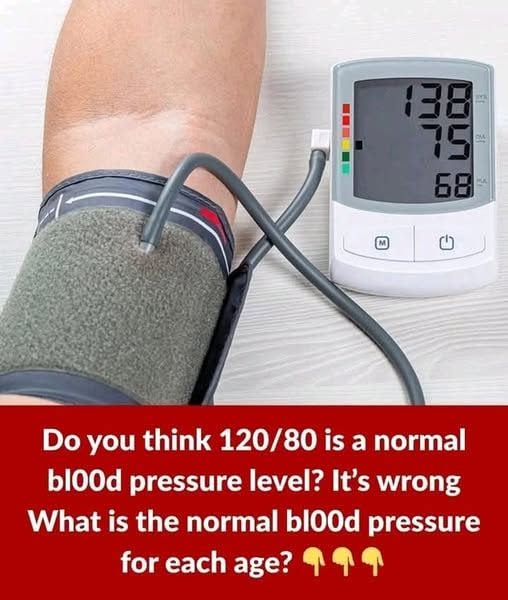
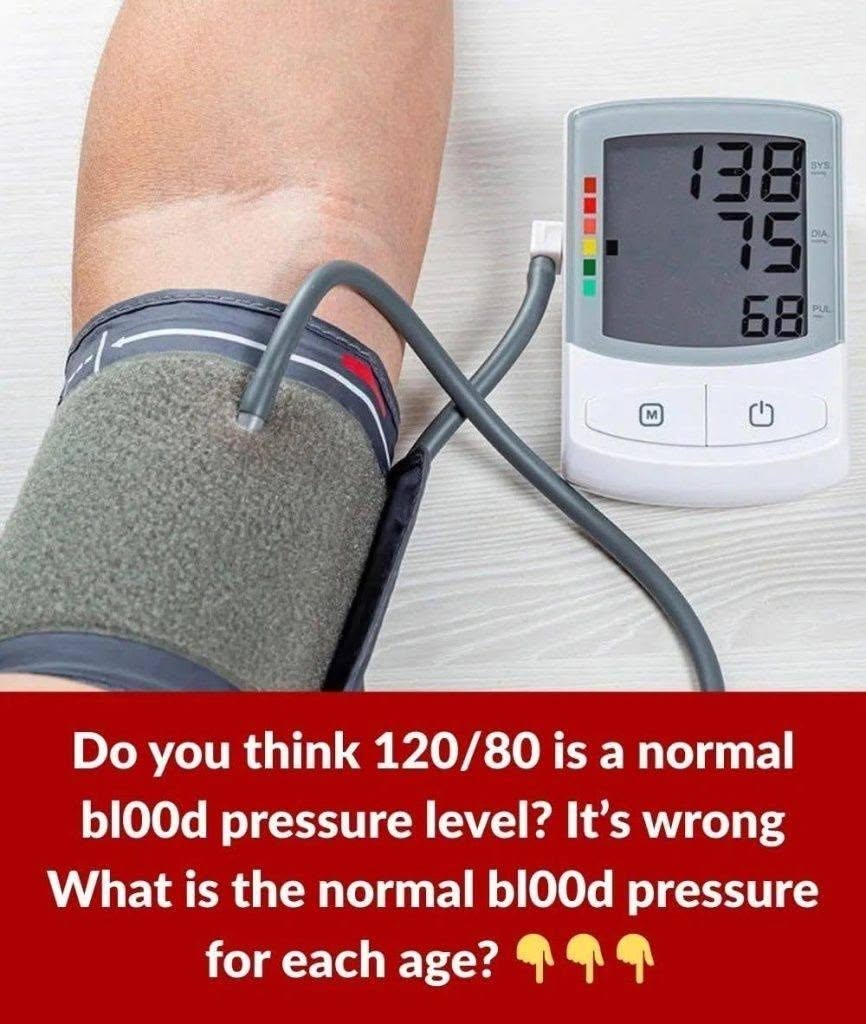
The monitor shown in the image displays 136/75 mmHg, with a pulse of 60 beats per minute.
For an adult, the systolic reading of 136 falls within the American Heart Association’s Stage 1 high blood pressure category, even though the diastolic reading is below 80. However, one reading alone does not diagnose hypertension.
The pulse reading of 60 beats per minute can be normal for some adults, including physically active people, but symptoms and individual circumstances matter.
How to Measure Blood Pressure Correctly at Home
For a more reliable reading:
Avoid caffeine, smoking, and exercise for 30 minutes beforehand.
Empty your bladder and sit quietly for at least five minutes.
Sit with your back supported, feet flat on the floor, and legs uncrossed.
Place the cuff on your bare upper arm, with your arm supported at heart level.
Do not talk during the measurement.
Take two readings one to two minutes apart and record the results.
Measuring at consistent times and keeping a record can help your healthcare professional identify a pattern.
When Should You Seek Medical Advice?
If your readings are repeatedly elevated, arrange an appointment with a healthcare professional. Do not start, stop, or change blood pressure medication based solely on an online chart.
If your blood pressure is above 180 systolic and/or 120 diastolic, repeat the measurement after a short wait. If it remains that high, seek immediate medical advice. If you also experience chest pain, shortness of breath, weakness, numbness, vision changes, or difficulty speaking, seek emergency medical care.
Final Thoughts
There is no single blood pressure chart that accurately describes every person at every age. For most adults, below 120/80 mmHg is considered normal under the American Heart Association classification, but individual readings need to be interpreted carefully.
Have you checked your blood pressure recently? Share your reading and age in the comments if you feel comfortable, and remember that online comments cannot replace personalized medical advice.