Redness on the Nose: Early Signs of Rosacea and Other Possible Skin Conditions
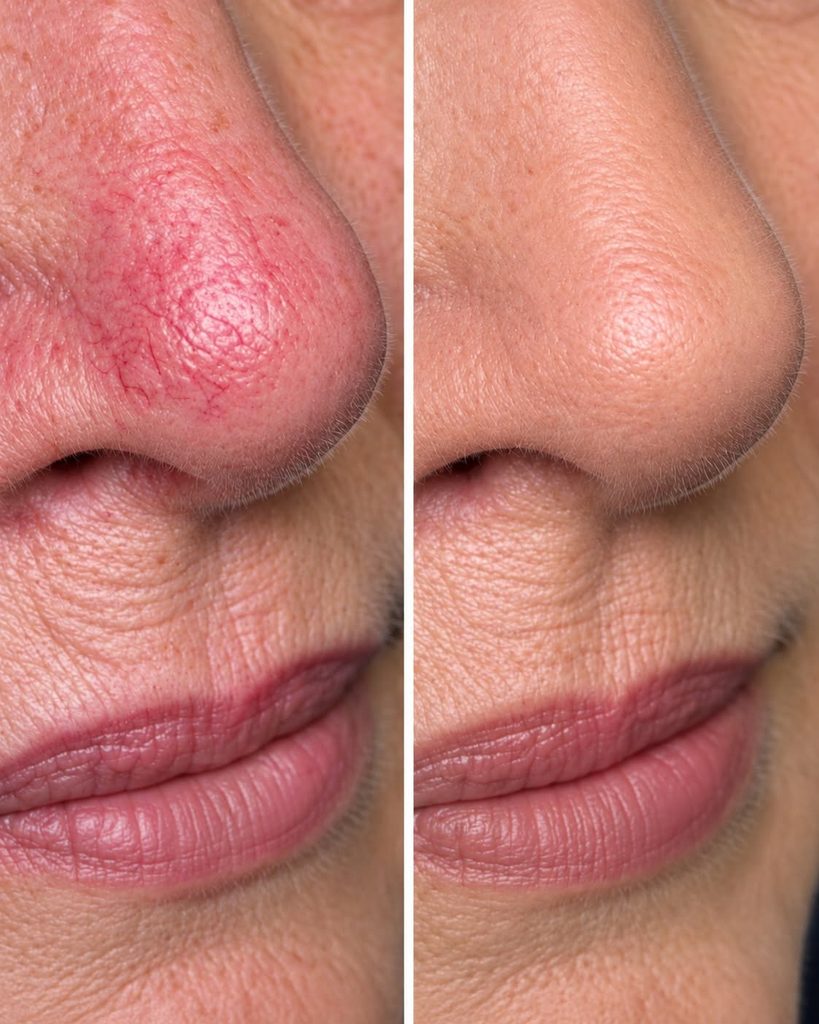
Persistent redness around the nose is a common skin concern. It may appear as a flushed area, visible tiny blood vessels, or irritated skin that becomes more noticeable after exposure to sunlight, heat, or certain skincare products.
Images comparing a red nose with a clearer complexion are often shared online as examples of a developing skin condition. One possible explanation is rosacea, a chronic inflammatory skin disorder that commonly affects the nose and cheeks. However, redness alone is not enough to establish a diagnosis.
1. What Is Rosacea?
Rosacea is a long-term skin condition that can cause redness, flushing, visible small blood vessels, and sometimes bumps that resemble acne.
Early symptoms may include:
Redness around the nose and cheeks that comes and goes.
Flushing after exercise, emotional stress, or exposure to heat.
Burning or stinging when applying skincare products.
Small visible blood vessels beneath the skin.
Dryness or increased skin sensitivity.
Symptoms vary between individuals, and redness may be less obvious on darker skin tones. <Cite refs={[“turn776441search0″,”turn776441search1″,”turn776441search3”]}/>
2. What Else Can Cause a Red Nose?
Rosacea is not the only possible explanation. Other causes include:
Contact dermatitis: Irritation or an allergic reaction to cosmetics, cleansers, fragrances, or other substances.
Seborrheic dermatitis: A skin condition that can cause redness and flaky or greasy patches around the nose.
Sun exposure: Ultraviolet radiation can cause temporary redness and contribute to long-term skin damage.
Acne or other inflammatory skin conditions: These may cause redness, bumps, or irritation around the nose.
A healthcare professional can help distinguish between these conditions, especially when symptoms persist or worsen. <Cite refs={[“turn776441search1″,”turn776441search10”]}/>
3. What Can Make Rosacea Worse?
People with rosacea may notice that certain environmental or lifestyle factors trigger flare-ups.
Common triggers include:
Direct sunlight and hot weather.
Very hot drinks and spicy foods.
Alcohol.
Hot showers or sudden temperature changes.
Intense exercise.
Emotional stress.
Irritating skincare or cosmetic products.
Not everyone has the same triggers. Keeping a simple record of when redness appears may help identify individual patterns. <Cite refs={[“turn776441search0″,”turn776441search5”]}/>
4. How Can You Care for Red or Sensitive Skin?
If your nose is frequently red or irritated, a gentle skincare routine may help reduce discomfort.
Wash your face with a mild, fragrance-free cleanser.
Use a moisturizer suitable for sensitive skin.
Apply broad-spectrum sunscreen with SPF 30 or higher every day.
Avoid harsh scrubs, abrasive exfoliants, and products that cause burning or stinging.
Avoid using strong steroid creams on your face unless specifically directed by a healthcare professional.
These measures may help protect sensitive skin, but they do not replace treatment when an underlying condition requires medication.
5. Can Rosacea Be Treated?
Although rosacea is a chronic condition, its symptoms can often be controlled with appropriate treatment.
Depending on the symptoms, a healthcare professional may recommend prescription creams or gels, oral medication, or laser treatment for visible blood vessels. The best approach depends on the individual’s skin and the severity of the condition.
Early assessment can help establish the correct diagnosis and prevent unnecessary use of products that may worsen irritation. <Cite refs={[“turn776441search1″,”turn776441search2″,”turn776441search5”]}/>
6. When Should You Seek Medical Advice?
Consider consulting a healthcare professional if facial redness persists, repeatedly returns, or is accompanied by bumps, swelling, or significant discomfort.
Seek prompt medical attention if you develop eye pain, blurred vision, or unusual sensitivity to light, as some conditions associated with facial inflammation can also affect the eyes.
Final Thoughts
A red nose does not automatically mean that someone has rosacea. It may reflect temporary flushing, irritation, sun exposure, or another skin condition.
The most useful approach is to recognize persistent symptoms, avoid known irritants, protect the skin from sunlight, and seek professional advice when necessary.
Have you ever experienced persistent redness around your nose or cheeks? What helped you manage it? Share your experience in the comments.
This article is for general educational purposes and does not replace a medical diagnosis.