Onion and Clove: Rediscover This Healthy Duo from the Past—Myths vs. Reality
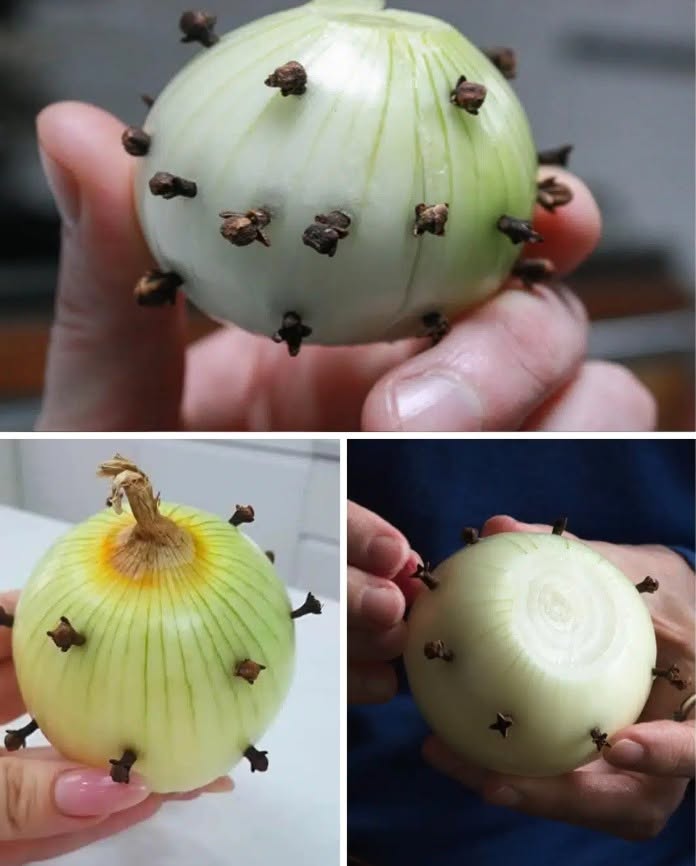
“Forgotten” home remedies and traditional household hacks frequently enjoy massive viral popularity across social media. The shared image displays a peeled onion studded with whole cloves from multiple angles, paired with a classic teaser caption: “Onion and clove: rediscover this healthy duo from the past….see more”.
Posts featuring this combination often ascribe miraculous powers to it: from instantly purifying indoor room air and curing respiratory infections to completely repelling household pests.
Here is the scientific and culinary reality behind studding an onion with cloves, debunking common myths, and practical ways to use this duo at home:
1. The Problem: The Clickbait Hype of “Ancient Remedies”
Social media posts promoting traditional solutions under the guise of “forgotten secrets” rely on calculated engagement strategies:
The Incomplete Caption (Clickbait): The “see more” prompt forces users to click the post or open the comments, artificially raising engagement metrics for social algorithms.
Appealing to Nostalgia: Framing a method as a “healthy duo from the past” plays on public skepticism toward modern chemical solutions and leverages the belief that ancient recipes were inherently superior.
Exaggerated Health Claims: Elevating a simple culinary technique or mild natural repellent into a medical “cure-all” that can allegedly “absorb room viruses” or detoxify organs.
2. Explanation: What Does an Onion Studded with Cloves ACTUALLY Do?
From a culinary, aromatic, and biological standpoint, combining onion and clove has distinct, legitimate uses:
A Culinary Classic (The Studded Onion / Oignon Clouté): In traditional French and European cuisine, a peeled onion spiked with 2 to 4 whole cloves is simmered in stocks, broths, soups, or stews. This technique infuses deep flavor into the liquid while preventing loose cloves from floating around and being accidentally bitten.
A Natural Insect Repellent (Flies and Mosquitoes): Cloves contain high levels of eugenol, a potent aromatic compound whose sharp scent repels insects such as flies, gnats, and mosquitoes. Combining cloves with the volatile sulfur compounds of onions (or citrus like lemons) enhances this ambient repellent effect.
Decongestant and Antiseptic Properties:
Cut onions release sulfur derivatives that can help mildly thin nasal mucus when inhaled near a bedside during a cold.
Eugenol in cloves possesses genuine antibacterial and mild local analgesic properties.
However, it is NOT a “Virus Magnet”: Onions do not physically absorb bacteria or viruses out of the air—a persistent urban legend dating back to the 1918 flu pandemic.
3. Advice & Steps: How to Use Onion and Cloves Effectively
To get the most practical benefits out of this simple combination in your household, follow these steps:
1. In the Kitchen: For Flavorful Broths and Soups
Peel a medium onion and press 2 to 3 whole cloves directly into the flesh. Place it into your pot when making chicken stock, vegetable soup, or slow-cooked stews. Remove the whole onion before serving.
2. As a Natural Fly Repellent
To deter flies outdoors or near windows during summer, slice an onion or lemon in half, press 5 to 10 cloves into each open half, and place them on patio tables or near open windows.
3. For Temporary Nasal Relief
If dealing with nighttime nasal congestion from a common cold, placing a freshly cut onion near your bed can help open airways via its natural aromatic vapors. Replace the onion every 24 hours.
Disclaimer & Safety Guidelines
This article is provided for general educational, culinary, and home management purposes. Traditional home remedies shared on social media are intended for routine household comfort and do not substitute for professional medical care. Never rely on natural pest repellents as a sole protection in regions with vector-borne diseases, and consult a medical doctor for severe respiratory illness or infections.