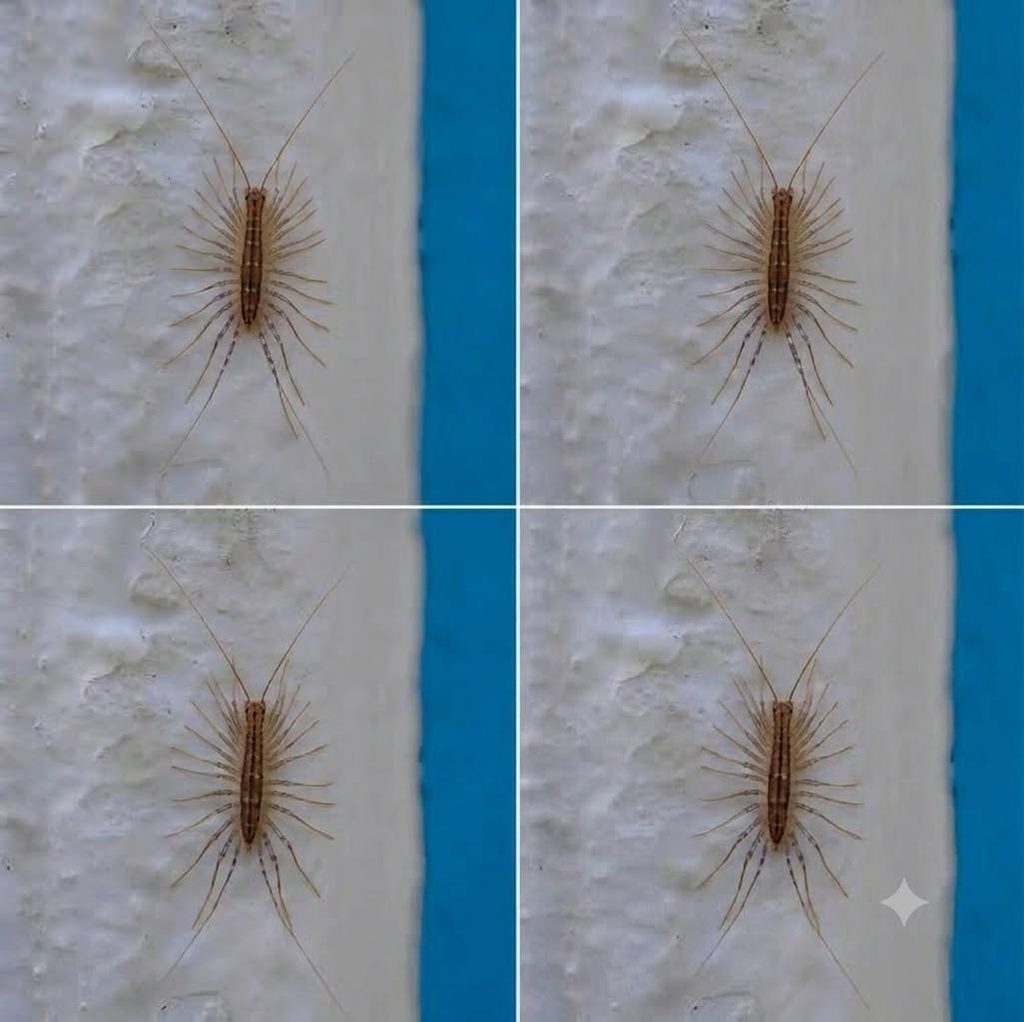
House Centipedes: Fact-Checking Viral Warnings vs. Ecological Reality
Alarmist posts regarding intimidating household arthropods frequently circulate across social media platforms. The shared image displays a detailed close-up of a house centipede (Scutigera coleoptrata) resting on a wall, accompanied by a sensational clickbait title: “Warning! If you have found this insect in your home, it’s a sign that you need to…see more…”.
While its long legs, distinct appearance, and rapid movements can be startling, framing the house centipede as a danger or home threat is purely sensationalist misinformation. In reality, the house centipede is a valuable natural predator and completely harmless to humans.
Here is the entomological breakdown of the house centipede, the mechanics behind fear-based clickbait, and practical advice for managing its presence in your home:
1. The Problem: Fear-Based Clickbait and Sensationalized Warnings
Social media creators frequently leverage common pest phobias to drive clicks and engagement:
Exploiting Entomophobia: Using extreme macro photography highlights the “monstrous” appearance of harmless creatures to provoke immediate visual aversion.
Truncated Alarmist Hooks (“Warning! … it’s a sign that you need to…see more…”): Creating a false sense of urgency forces readers to click through to external ad-monetized websites.
Demonizing Natural Pest Control: Urging homeowners to exterminate this arthropod removes an effective, natural pest-control agent from the household.
2. Explanation: Why House Centipedes Are Beneficial Housemates
From an entomological and ecological perspective, the house centipede plays an important predatory role indoors:
Myriapod, Not an Insect: The house centipede is not an insect, but a carnivorous myriapod.
A Formidable Pest Hunter: It feeds exclusively on common household pests, including silverfish, fleas, bedbugs, cockroaches, termites, spiders, and mosquitoes.
Harmless to Humans and Property: House centipedes rarely bite humans (their legs/forcipules are generally too weak to penetrate human skin, and their venom is mild), transmit no human diseases, and do not cause structural or food damage.
3. Advice & Steps: What to Do If You See a House Centipede
To maintain a healthy indoor environment without harming beneficial arthropods, follow these recommendations:
1. Leave It Alone
If you spot a house centipede, simply let it be. Its presence generally indicates that it is actively hunting other hidden pests inside your walls or dark spaces.
2. Manage Household Humidity
House centipedes thrive in humid environments (basements, bathrooms, crawlspaces). If you wish to reduce their presence naturally, use a dehumidifier and fix plumbing leaks; they will naturally migrate elsewhere due to lack of moisture and prey.
3. Safely Relocate It
If seeing one causes discomfort, gently trap it using a glass cup and a piece of cardboard, then release it outdoors near the foundation of your home.
Disclaimer & Safety Guidelines
This article is provided for general educational, environmental literacy, and fact-checking purposes. Viral posts regarding common household creatures frequently exaggerate potential risks to drive social engagement. For major infestations of destructive household pests (such as termites or bedbugs), consult certified pest control professionals.