“Find 1 Difference” Visual Puzzles: Fact-Checking Social Media Engagement Bait Disguised as IQ Tests
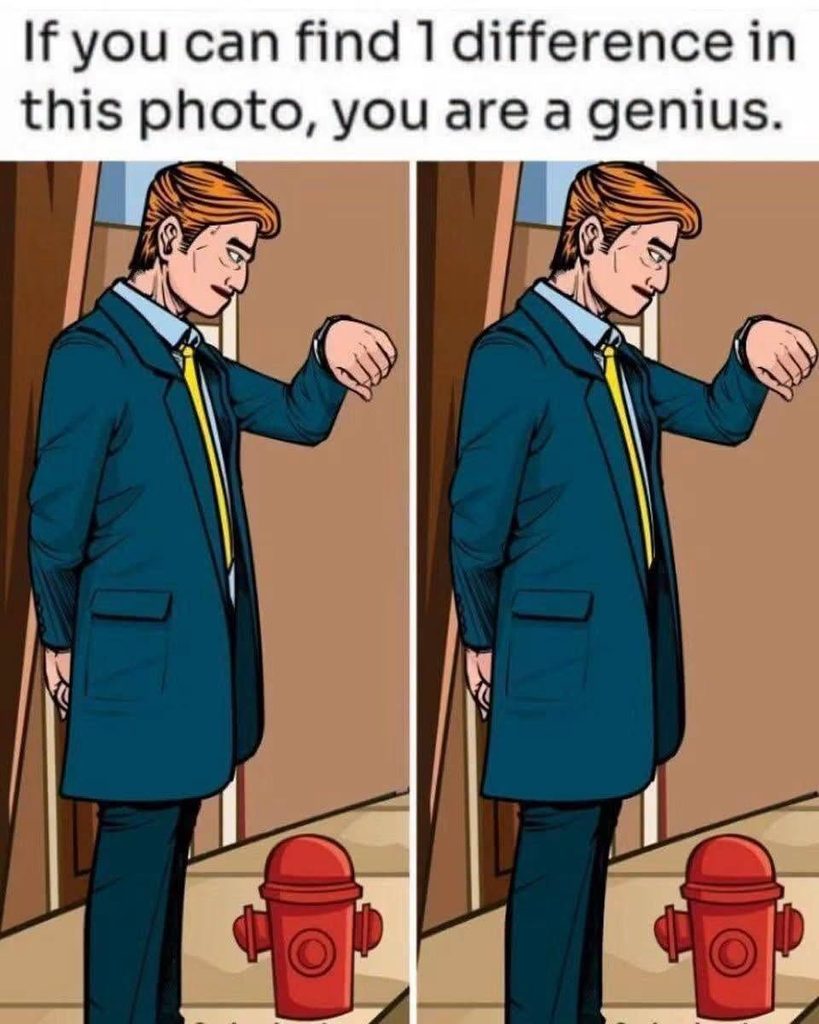
Visual puzzles promising to measure intelligence—often accompanied by flattering claims like “only a genius can solve this”—are ubiquitous across social media platforms. The shared image displays two side-by-side comic-style illustrations of a man in a blue coat looking at his watch near a red fire hydrant, topped with the bold text: “If you can find 1 difference in this photo, you are a genius.”.
While these spot-the-difference challenges appear to be lighthearted fun, many are engineered as engagement bait using identical duplicate images to force users to linger, zoom in, and flood the comment section.
Here is the psychological and technical breakdown of fake visual puzzles, the mechanics behind engagement farming, and practical tips to spot these tricks online:
1. The Problem: Ego Flattery and Engineered Frustration
Creators of viral engagement bait rely on specific psychological triggers to drive passive scrollers into active interactions:
Ego Flattery (“You are a genius”): Framing a simple visual task as a test of high intelligence or superior perception leverages the user’s desire for self-validation and achievement.
Engineered Frustration: By posting two 100% identical side-by-side images, the creator guarantees that users will spend several minutes scanning the graphic before leaving frustrated comments like “There is no difference!” or “Is this a trick?”.
Algorithm Manipulation: Extended dwell time (the amount of time a user inspects an image) combined with high comment volume signals to social media algorithms that the post is highly engaging, boosting its distribution feed-wide.
2. Explanation: What Does Image Analysis Reveal About These Posts?
From a technical and cognitive perspective, these fake visual tests operate on simple digital replication:
Pixel-for-Pixel Duplication: A side-by-side digital comparison reveals that the two panels are identical copies of the exact same image file. The fire hydrant, coat folds, facial lines, and watch face contain no structural or color variations.
Exploiting Change Blindness: Human cognitive processing leads the brain to continuously search for microscopic variations (a missing line, a shade difference, or a shifted pixel) even when none exist, creating a false assumption that the viewer simply “missed it.”
Traffic Monetization: In many instances, the post caption or top pinned comment contains a link to external, ad-heavy websites or click-farms designed to monetize the influx of curious traffic.
3. Advice & Steps: How to Spot and Bypass Fake Visual Puzzles
To avoid wasting time on engineered engagement traps, use these quick verification habits:
1. Apply the Cross-Eyed (3D) Overlay Technique
Defocus your eyes slightly and cross them until the two side-by-side images overlap into a single center image in your field of view. If a genuine difference exists, that specific spot will appear to flicker or shimmer. If the overlapped image remains completely flat and clear, the two panels are identical.
2. Refrain from Commenting
Avoid commenting on the post to call out the trick. Social media algorithms treat all comments—positive, confused, or angry—as positive engagement signals that further amplify the post’s reach to other users.
3. Filter or Mute Engagement-Farming Pages
If a page consistently posts fake visual challenges with hyperbolic claims about intelligence or vision, select “Hide all from this page” to clean up your social media feed.
Disclaimer & Safety Guidelines
This article is provided for general educational, media literacy, and fact-checking purposes. Viral visual puzzles claiming to test intelligence or genius have no psychometric or scientific validity. For accurate cognitive or visual evaluations, rely strictly on standardized medical or psychological assessments.