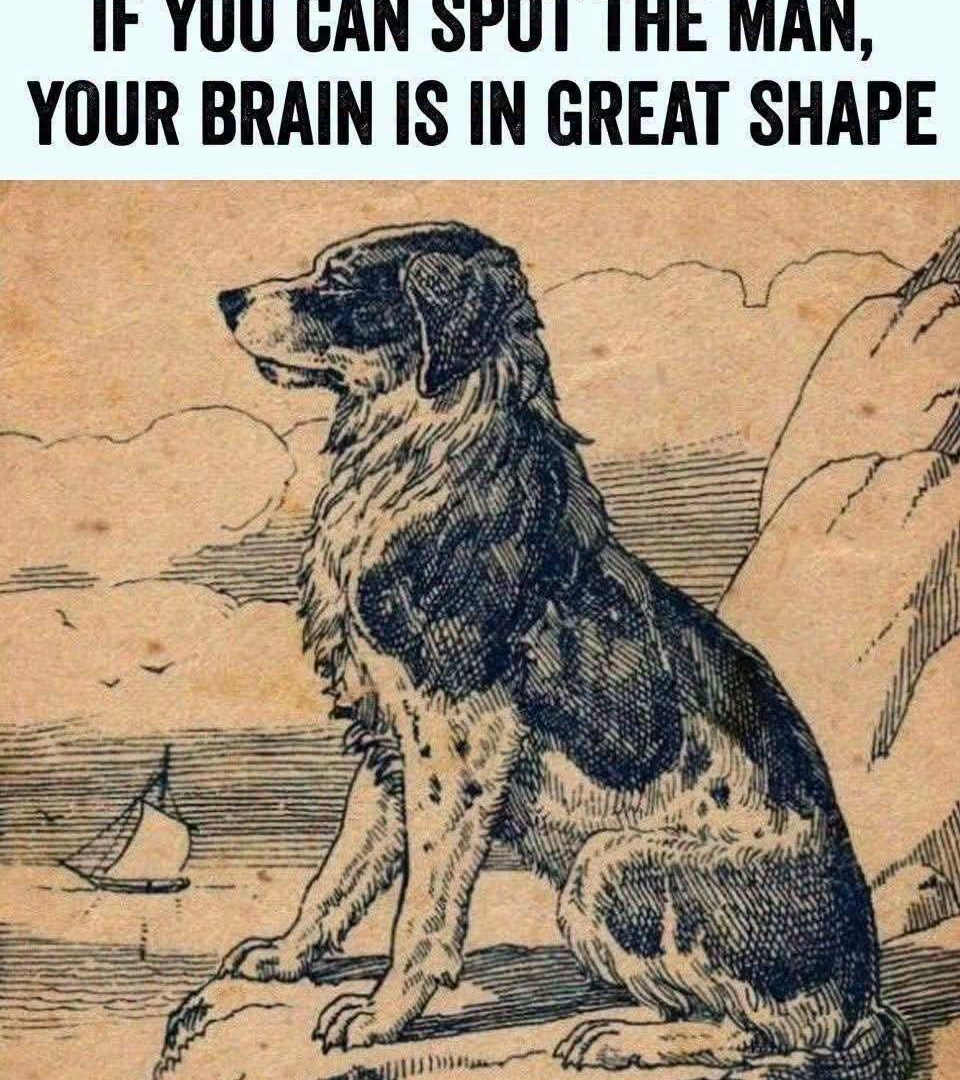
Can You Spot the Hidden Man in This Winter Scene? Test Your Brainpower!
Optical illusions and visual brain teasers continue to captivate the internet, and for good reason: they are a fun, engaging way to sharpen your focus and test your mental agility. This vintage black-and-white illustration depicting a peaceful winter landscape with a deer bounding through the trees conceals a human face hidden in plain sight.
Only a small percentage of viewers with sharp spatial awareness can spot the man in under 10 seconds. Are you up for the challenge?
How to Find the Hidden Man
When looking at the picture right-side up, your brain automatically prioritizes the primary subjects: the deer leaping through the snow, the evergreen trees, and the prominent tree trunk on the right.
To break through this cognitive trick, follow this simple clue:
Flip the Image Upside Down: Rotate the picture 180 degrees (or turn your phone upside down).
Look at the Branches: Once inverted, the bare branches surrounding the deer transform into the clear profile of a man’s face. You will immediately spot his forehead, nose, lips, and chin formed by the outline of the foliage.
The Science Behind Optical Illusions
Why do our minds fall for these visual traps? This puzzle relies on a natural psychological phenomenon known as pareidolia—the brain’s tendency to perceive meaningful images (especially human faces) in random or complex patterns.
Pattern Recognition: Human survival historically depended on quickly recognizing faces and threats in nature. Your visual cortex continuously scans environments to make sense of ambiguous shapes.
Figure-Ground Perception: The artist cleverly manipulated negative space, forcing your brain to process the branches as background scenery until a shift in orientation reveals the secondary figure.
Benefits of Solving Visual Puzzles Daily
Engaging with brain teasers and optical illusions isn’t just entertainment; it provides genuine cognitive benefits:
Enhances Visual Processing: Trains your eyes and brain to notice subtle details in everyday environments.
Boosts Problem-Solving Skills: Forces you to approach visual information from alternative perspectives.
Improves Focus & Concentration: Requires sustained, detail-oriented attention, offering a quick mental workout during your daily routine.