Kindergarten Naptime Photos on Social Media: Fact-Checking Sensational Headlines and Child Privacy Rights
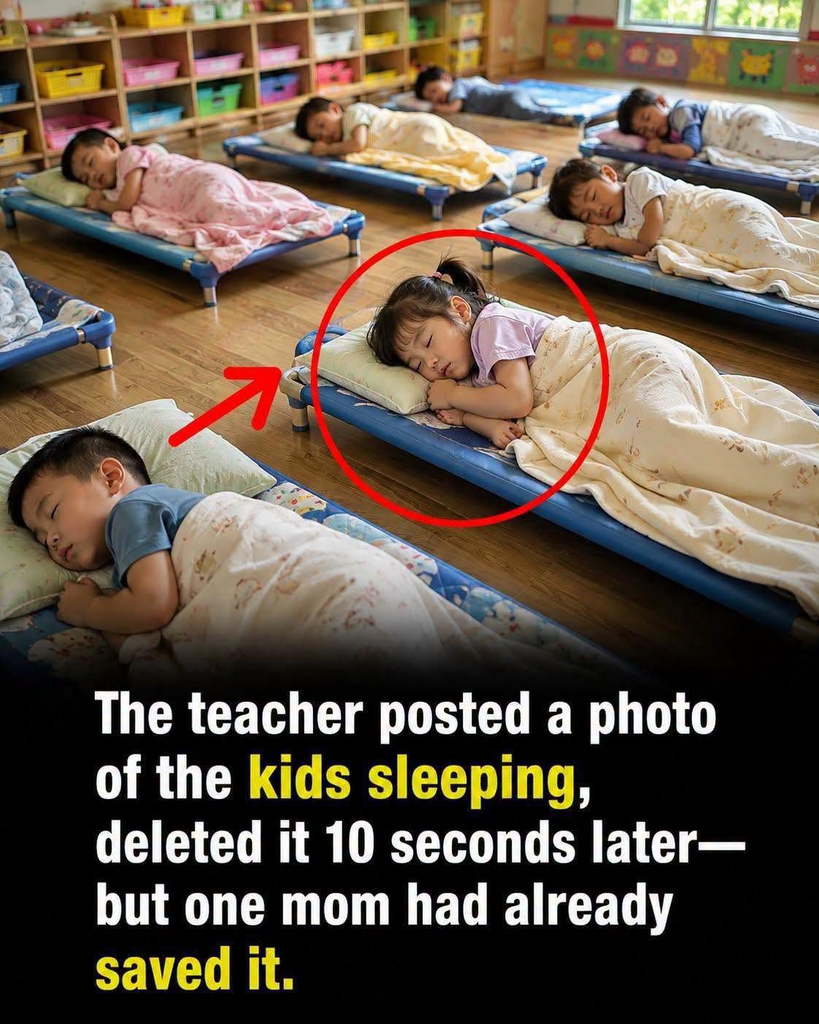
Dramatic stories involving schools and early childhood education frequently generate high engagement across social media platforms like Facebook and Instagram. The shared graphic displays a preschool nap room with young children sleeping on cots, a girl circled in red, and a suspenseful caption: “The teacher posted a photo of the kids sleeping, deleted it 10 seconds later—but one mom had already saved it.”.
While this post uses staged visuals and clickbait tactics to stir up curiosity or concern, it highlights an important, real-world issue: minor privacy, digital safety, and image rights in educational settings.
Here is an analysis of how these viral posts operate, the legal rules governing student photos, and best practices for parents and educators.
1. The Problem: Fabricating Suspense Around Early Childhood Settings
Viral pages often exploit harmless photos paired with sensationalized narratives to capture online attention:
Manipulative Visual Cues (Red Circles and Arrows): Encircling a completely ordinary detail (a child sleeping peacefully) creates a false impression of something wrong or hidden, prompting users to stare at the image.
Dramatic Storytelling (“Deleted it 10 seconds later”): Suggesting a hasty deletion implies that a secret or wrongdoing occurred, encouraging people to search for answers in the comments.
AI-Generated or Stock Imagery: Many illustrations used in these clickbait traps do not depict real news events and are produced synthetically or sourced from stock photography libraries.
2. Explanation: Legal Framework and Safety of Children’s Photos in Schools
Beyond the fictional nature of these viral posts, publishing photos of students is subject to strict privacy regulations:
Minors’ Image Rights: Teachers and school administrators are legally required to obtain explicit written consent from parents or legal guardians before publishing photos of students on public platforms or social media.
Geolocational and Safety Risks: Posting photos showing children in their daily environments (school uniforms, classroom layouts) on public accounts can expose sensitive information regarding school locations and daily routines.
Use of Secure School Portals: To share classroom activities safely with families, schools increasingly rely on password-protected parent portals or internal communication tools rather than open social media channels.
3. Practical Advice: Managing Child Privacy and Online Photos
To protect children’s digital identity while maintaining healthy communication between schools and families, follow these recommendations:
1. Carefully Review Consent Forms
At the beginning of the school year, read photo release forms thoroughly. Parents have the right to opt out of public social media sharing while allowing internal use (such as class yearbooks).
2. Avoid Over-Sharing (“Sharenting”)
If you receive a photo of your child taken during a school event, refrain from posting it on personal social media accounts if other children are identifiable without their parents’ permission.
3. Request Removal of Unwanted Images
If a photo of your child is published online without prior consent, you have the right to request its immediate removal from the administrator or institution responsible.