“Mysterious Creature” on a Park Bench: AI Image vs. Biological Reality
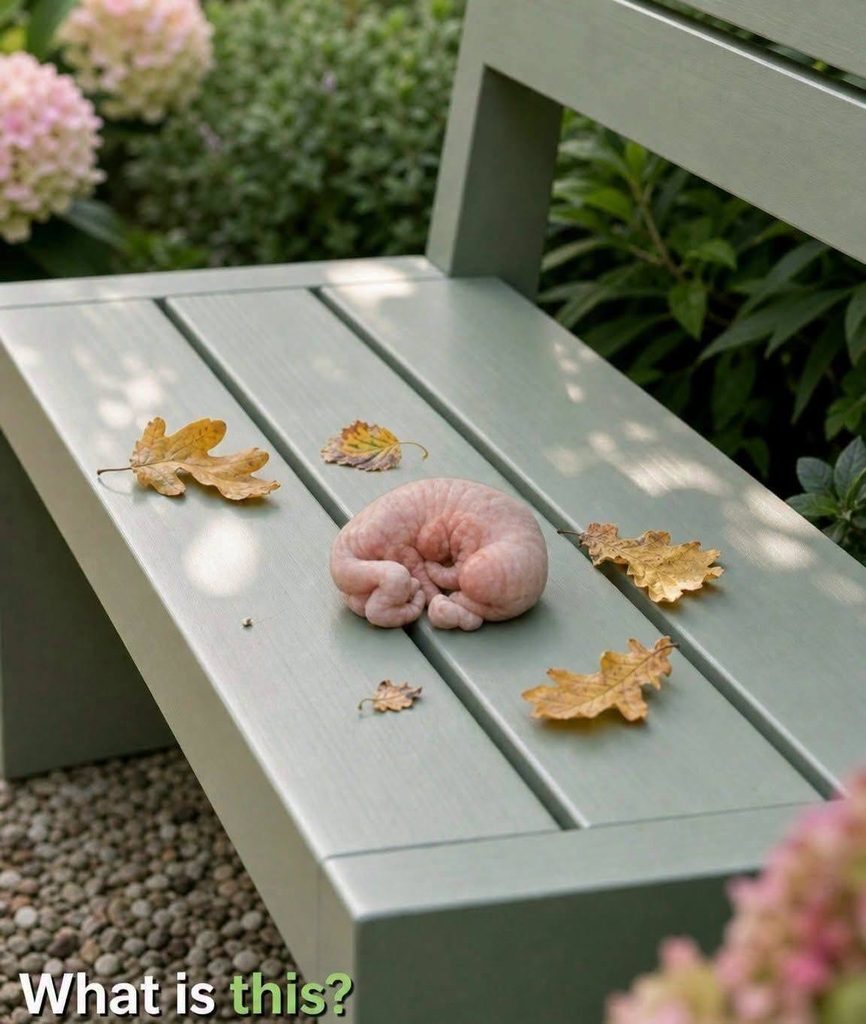
Viral posts featuring “unknown creatures” or bizarre organic masses discovered in nature generate massive intrigue, panic, and shares across social media platforms. The shared image displays a pink, wrinkled mass curled up on a wooden park bench among autumn leaves, accompanied by a dramatic story: “This morning, I took my dog for a walk in the park. When I sat on a bench to rest for a moment, I suddenly spotted this. My dog was too frightened to approach… See the first comment for the answer.”
Sensationalist posts like this often claim the object is a newly discovered mutant, an alien life form, or a bizarre biological anomaly.
Here is the technical breakdown of where this image actually comes from, the digital visual artifacts proving it is AI-generated, and how to spot synthetic nature hoaxes online:
1. The Problem: The Narrative Power of AI-Generated Clickbait
Stories about “mysterious animals” found in public spaces rely on calculated social engineering tactics:
Relatable Storytelling: Involving a pet (“my dog was too frightened to approach”) builds immediate emotional believability and curiosity.
The “First Comment” Engagement Trap: The prompt “See the first comment for the answer” forces readers into the comment section, driving up interaction rates and triggering recommendation algorithms.
Visceral Visual Shock: Uncanny, flesh-like textures trigger a natural human reaction of revulsion or fascination, prompting users to share the image instantly.
2. Explanation: How We Know This Is Synthetic AI Art
From a digital forensics and image analysis perspective, this picture features several dead giveaways of generative AI tools (such as Midjourney or DALL-E):
Anatomical Incoherence: The pink object lacks a logical biological structure. It has no distinct head, spine, limbs, or sensory organs—just a random blend of folded, hairless skin textures synthesized by an algorithm.
Environmental & Lighting Anomalies:
The autumn oak leaves resting on the bench appear unnaturally placed and lack depth or realistic stems.
The shadows cast by the object and the leaves do not align naturally with the soft, dappled sunlight filtering through the background trees.
Complete Lack of Biological Documentation: No living organism, embryo, or species matching this description exists in zoological or veterinary records.
3. Advice & Steps: How to Identify AI-Generated Nature Hoaxes
To avoid spreading digital hoaxes and evaluate strange wildlife images critically, follow these steps:
1. Zoom In on Key Anatomical Features
Check for biological logic: look for clear eyes, joints, claws, or nostrils. Generative AI frequently struggles to render consistent anatomy on fictional creatures.
2. Recognize Classic Clickbait Formats
If a post combines a shocking visual with phrases like “Check the first comment” or an overly dramatic personal backstory, maintain immediate skepticism regarding the image’s authenticity.
3. Perform a Reverse Image Search
Run the photo through reverse image search tools to see if it originates from digital art communities, AI prompts showcases, or known fact-checking archives.
Disclaimer & Safety Guidelines
This article is provided for general educational, digital media literacy, and fact-checking purposes. Viral images of “mysterious creatures” shared on social media are almost universally AI-generated art or digital sculptures designed to drive traffic. Always verify surprising scientific or zoological claims through reputable educational or academic sources before sharing.