Moldy Bread Myths: Why Cutting Off Moldy Spots Is Dangerous for Food Safety
Here is the microbiological breakdown of mold growth in soft foods, the mechanics behind food safety engagement-bait, and best practices for managing bakery shelf life:
1. The Problem: Normalizing Food Safety Risks to Farm Engagement
Viral social media posts focusing on questionable food habits leverage specific psychological and algorithmic triggers:
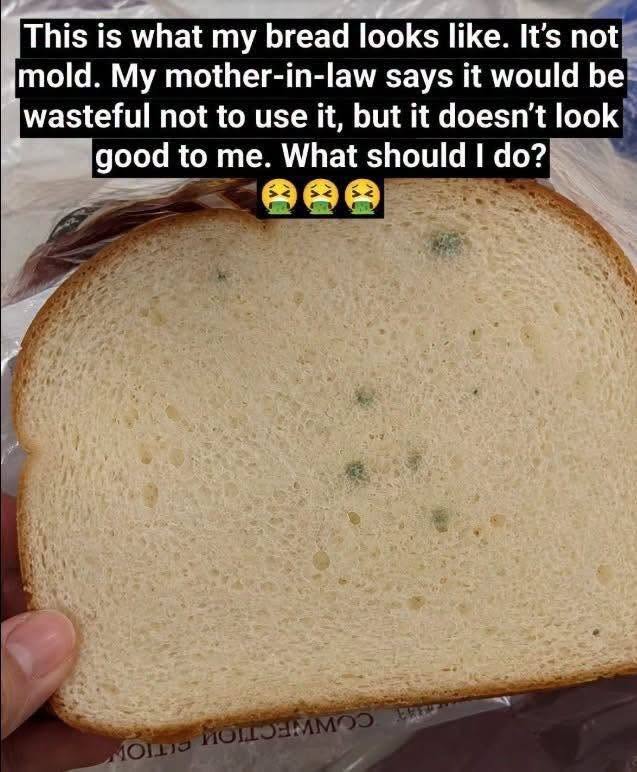
Sensation-Driven Denial (“It’s not mold”): Claiming that obvious mold spots are “something else” creates artificial debate and prompts thousands of users to correct the poster in the comments.
Relatable Family Pressure (“My mother-in-law says…”): Injecting interpersonal or intergenerational friction encourages users to share personal anecdotes about food waste and family advice.
Farming Comment Section Activity: High comment volumes signal algorithms to push the post onto mainstream feeds, spreading dangerous misconceptions about food safety.
2. Explanation: Why You Cannot Just “Cut Off” Mold on Bread
From a food microbiology and toxicology standpoint, mold behavior in porous foods is drastically different from hard foods:
Microscopic Root Structures (Hyphae): The fuzzy spots visible on the surface of bread are merely the spore-producing structures (sporangia) of the mold. Beneath the surface, invisible thread-like roots called hyphae quickly branch through the soft, porous interior of the entire loaf.
Mycotoxin Contamination: Many common bread molds (such as Penicillium or Aspergillus) produce harmful secondary metabolites called mycotoxins. These toxic chemical compounds can spread throughout the slice and adjacent slices, causing gastrointestinal distress, allergic reactions, or respiratory issues.
Invisible Spore Dispersal: Mold spores travel easily through air pockets within bread packaging. If one slice displays visible spots, the entire bag is likely contaminated with invisible mold spores.
3. Advice & Steps: How to Safely Handle Mold and Prevent Bread Waste
To maintain proper kitchen hygiene and avoid foodborne illnesses while reducing unnecessary waste, follow these practical steps:
1. Discard the Entire Loaf Immediately
Do not attempt to toast, cut around, or trim moldy spots from soft baked goods. Wrap the contaminated bread securely in a bag and throw it away in an outdoor waste bin to prevent spores from spreading in your kitchen.
2. Freeze Extra Slices for Long-Term Storage
If you cannot finish a fresh loaf of bread within 3 to 5 days, slice it immediately and store it in the freezer. Frozen bread stays fresh for months and can be toasted directly from the freezer without risk of mold development.
3. Store Bread in Cool, Dry Environments
Keep bread in a cool, dry pantry away from heat sources like stoves or dishwashers. Moisture and warmth accelerate fungal spore germination. Avoid refrigerating fresh bread, as low temperatures without freezing cause starch retrogradation, making the bread stale faster.
Disclaimer & Safety Guidelines
This article is provided for general educational, food literacy, and fact-checking purposes. Viral social media claims trivializing mold growth or encouraging the consumption of spoiled food pose genuine health risks. If you or a family member experience symptoms of food poisoning or severe allergic reactions after consuming spoiled food, seek medical advice promptly.