$20 Bill with a “Bow and Arrow” Stamp: Chop Marks vs. Rare Bill Myths
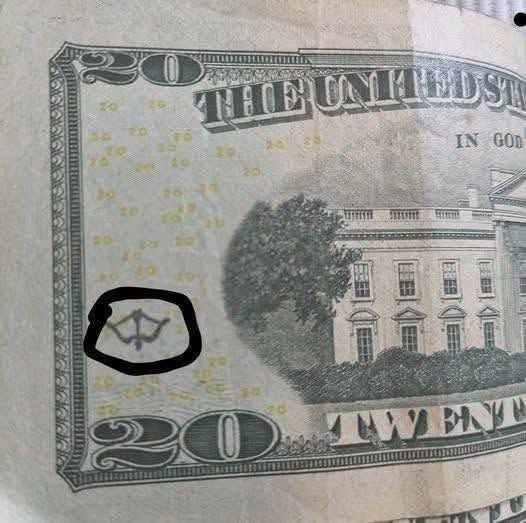
Posts claiming that a mysterious detail on ordinary currency turns it into a valuable fortune regularly circulate across social media platforms. The shared image displays the back of a U.S. $20 bill near the White House, where a small bow-and-arrow symbol is circled in black, paired with a classic clickbait hook: “If you have 20 with this row you are so lucky… See more”.
Despite viral speculation asserting that this is an “ultra-rare Federal Reserve printing error” or a “valuable Masonic symbol,” this mark is actually a commercial chop mark stamped onto the bill with ink after it was released into circulation.
Here is the numismatic explanation of chop marks, the clickbait tactics behind fake currency treasure posts, and how to identify genuine printing errors:
1. The Problem: The Clickbait Formula of “Pocket Change Fortune” Posts
Content claiming to reveal secret, highly valuable markings on everyday currency relies on proven viral engagement triggers:
The Appeal of Easy Money (Clickbait): Convincing people that a regular $20 bill in their wallet might be worth thousands instantly prompts readers to check their money and share the post.
Truncated Headlines: Truncating the caption with “See more” forces users to click through or open the comment section to discover the alleged “value”.
Confusing Post-Circulation Marks with Mint Errors: Most of the general public cannot distinguish official minting anomalies from third-party ink stamps or ink markings.
2. Explanation: What Is a “Chop Mark” on Paper Currency?
From a banking and numismatic perspective, small inked symbols (bows, foreign characters, letters, geometric shapes) have a clear historical and commercial purpose:
Stamps from Foreign Exchange Brokers and Merchants: In many countries (particularly in parts of Asia, Latin America, and the Middle East), money changers, private banks, and merchants apply small ink stamps (chop marks) to verify that a bill has been inspected and confirmed as genuine currency.
No Added Numismatic Value: Contrary to popular online myths, a chop mark is not a printing error produced by the U.S. Bureau of Engraving and Printing. Because it is an ink mark applied after the bill entered circulation, professional collectors consider it post-printing damage rather than a rare mint error.
Remains Legal Tender: Although stamped with ink, the bill retains its full face value of $20 and remains completely valid for everyday transactions.
3. Advice & Steps: How to Spot Genuine Numismatic Errors
To avoid falling for viral rumors about “rare” pocket change, keep these guidelines in mind when evaluating paper currency:
1. Differentiate Mint Ink from Stamp Ink
Genuine Bureau of Engraving and Printing errors (such as double impressions, misaligned Treasury seals, or ink voids) occur during the official printing process under the same ink layer. Chop marks appear as secondary ink (often red, blue, or black) stamped over the original design.
2. Check the Serial Number
Bills prized by collectors usually feature unique serial numbers (known as “Fancy Serial Numbers”), such as solid numbers (e.g., 77777777), ladders (e.g., 12345678), or radar numbers (e.g., 12344321).
3. Consult Recognized Numismatic Guides
If you suspect a bill has a legitimate manufacturing anomaly, consult established currency guides or have it examined by a certified numismatist rather than relying on social media valuations.
Disclaimer & Safety Guidelines
This article is provided for general educational, financial literacy, and fact-checking purposes. Viral posts promising hidden fortunes in everyday pocket change frequently exploit ordinary post-circulation markings. Never pay for appraisals based solely on ink stamps or hand-drawn markings on paper currency.