Dissecting the “Alien Creature” Found on a Dog: Fish Gill Arches, Viral Myths, and Pet Safety
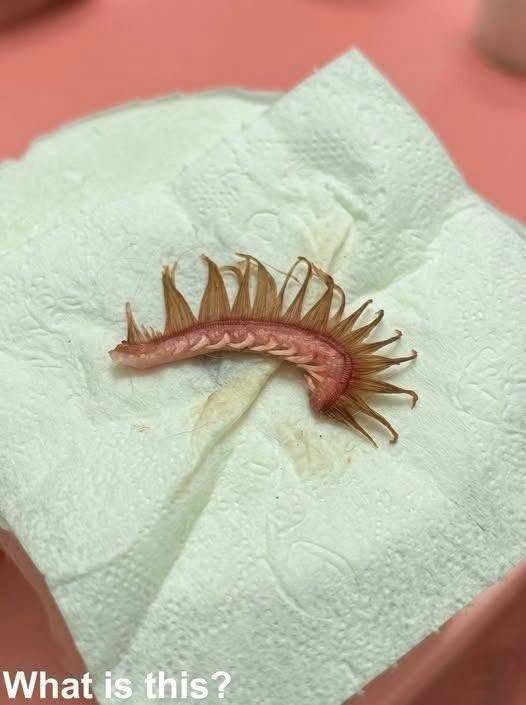
Photos showing bizarre biological fragments picked up by outdoor pets regularly spark massive curiosity across social media feeds. The shared image displays a curved, pinkish, comb-like structure resting on a white paper towel, accompanied by an intriguing caption: “My girlfriend came home after a walk with the dog. Attached to the dog’s fur, we discovered this. We’ve been sitting here looking at it for quite a while now, trying to figure out what it is, but with no luck. Does anyone know what this is? Check the first comment for the answer”.
Despite viral comment sections speculating about “alien centipedes,” venomous caterpillars, or unknown deep-sea parasites, this object is simply a fish gill arch (part of a fish’s respiratory system, commonly referred to as a gill).
Here is the anatomical breakdown of this discovery, why images like this frequently go viral, and essential safety steps to protect your pets during outdoor walks:
1. The Problem: The Clickbait Behind “Unidentified Creature” Posts
Social media posts presenting animal fragments as mysterious monsters or alien lifeforms rely on proven engagement drivers:
Unfamiliar Alien-Like Appearance: The fine, dark filaments lined along a curved cartilaginous or bony bone look eerily similar to legs or spikes, confusing observers unfamiliar with fish anatomy.
Information Retention Strategy: Directing readers to the comment section for the answer (“Check the first comment for the answer”) drives thread clicks and scrolling, artificially boosting post engagement.
Pet Owner Anxiety: The thought of a dangerous parasite or venomous bug hitching a ride on a dog’s fur triggers instant concern and rapid social sharing.
2. Explanation: What Is a Fish Gill Arch?
From a biological and zoological perspective, this structure is a standard component of freshwater and marine fish anatomy:
Function of the Gill Arch: The arch supports delicate, blood-rich gill filaments and gill rakers that filter water and extract dissolved oxygen for the fish.
How It Got There: During walks near lakes, rivers, beaches, or park trash cans, dogs frequently encounter fish remains left behind by anglers or washed ashore.
Why It Sticks to Fur: As the gill tissue dries out, the fine rakers and stiff filaments act like natural burrs or Velcro, tangling easily into a dog’s coat when they roll on the ground.
3. Advice & Steps: What to Do If Your Dog Picks Up Fish Debris
If you find unknown organic scraps or fish parts attached to your pet after a walk, follow these practical steps:
1. Carefully Inspect Your Pet’s Fur and Mouth
Use gloves or a paper towel to gently detach the fragment from the coat. Check your dog’s paws and the inside of their mouth to ensure no sharp fish bones or hooks are embedded.
2. Clean and Sanitize the Area
Wash the affected fur with warm water and pet shampoo to eliminate lingering bacteria, decay odors, or fish oils.
3. Prevent Scavenging on Walks
Keep a close eye on your dog around shorelines, fishing spots, and wooded trails. Ingesting decaying fish or sharp fish bones can cause serious gastrointestinal punctures or bacterial infections.
Disclaimer & Safety Guidelines
This article is provided for general educational, animal biology, and fact-checking purposes. Viral mystery posts frequently turn everyday animal anatomy into internet clickbait. If you suspect your pet has ingested a foreign object, sharp bone, or toxic substance, contact a qualified veterinarian immediately.