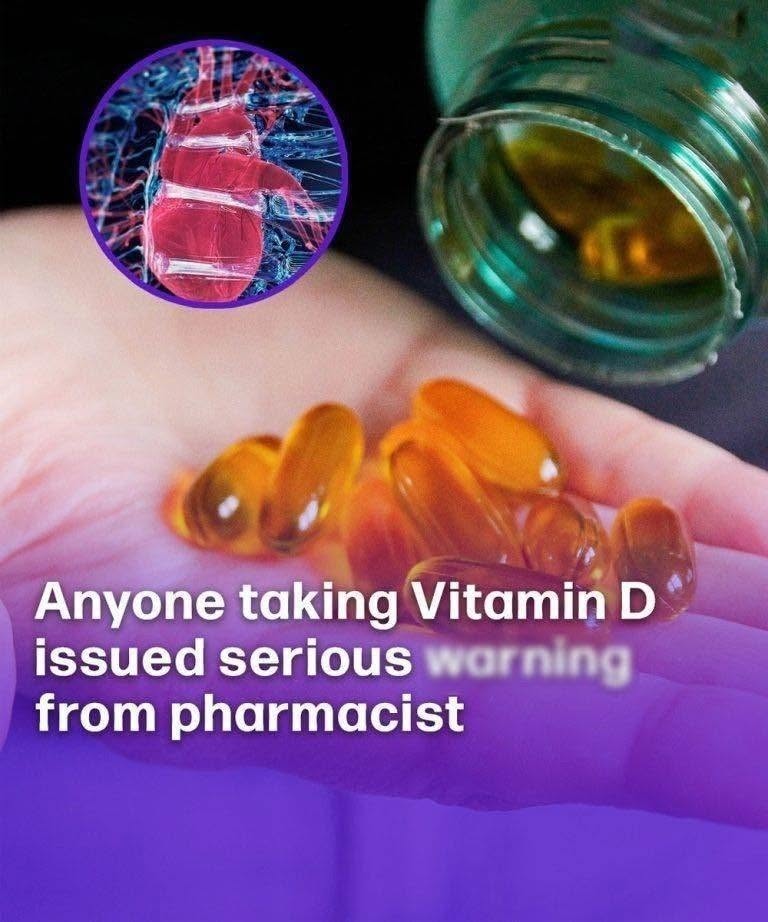
A viral image is warning people who take vitamin D, suggesting that the supplement could be seriously dangerous.
There is a real safety issue behind this warning, but the viral message is missing an important detail:
Vitamin D is an essential nutrient, and the problem is usually excessive supplementation—not normal recommended amounts.
☀️ Why Do We Need Vitamin D?
Vitamin D helps the body absorb calcium and supports:
🦴 Bone health 💪 Normal muscle function 🧠 Nerve function 🛡️ Normal immune function
A deficiency can cause health problems, which is why vitamin D supplements are sometimes recommended when someone has low levels or has a higher risk of deficiency. OpenDataShare
⚠️ When Can Vitamin D Become Dangerous?
Vitamin D is fat-soluble, so taking excessive amounts over time can cause too much calcium to build up in the blood.
This condition is called hypercalcemia.
Possible symptoms include:
🔸 Nausea or vomiting 🔸 Loss of appetite 🔸 Muscle weakness 🔸 Excessive thirst 🔸 Frequent urination 🔸 Dehydration 🔸 Kidney stones
In severe cases, vitamin D toxicity can cause kidney failure, abnormal heart rhythms and other serious complications. OpenDataShare
💊 How Much Is Too Much?
For most adults, the established upper intake level is 4,000 IU (100 mcg) per day from all sources, although doctors may temporarily prescribe higher doses to treat a documented deficiency. OpenDataShare
That doesn’t mean everyone taking more than 4,000 IU once has been poisoned. The risk depends on the dose, duration, individual health and medical supervision.
The bigger concern is regularly taking high doses without medical supervision.
⚠️ Vitamin D Can Also Interact With Some Medicines
Vitamin D supplements can interact with certain medications.
For example, combining vitamin D with thiazide diuretics can increase the risk of excessively high calcium levels. Other medicines can also affect vitamin D absorption or metabolism. OpenDataShare
That’s why it’s important to tell your doctor or pharmacist about supplements you’re taking.
❌ Should You Stop Taking Vitamin D?
No—not because of a viral Facebook post.
If vitamin D was prescribed because you have a deficiency, follow the prescribed dose and don’t change it without medical advice.
If you’re taking a high-dose supplement on your own, especially for months, it’s reasonable to ask a healthcare professional whether the dose is appropriate.
🧠 THE BOTTOM LINE
The viral warning is partly based on a real medical risk but is exaggerated when it implies that vitamin D itself is dangerous.
Too much vitamin D can be toxic. The correct dose can be beneficial when there is a genuine need.
The key isn’t to fear vitamin D—it’s to avoid unnecessary high-dose supplementation and use the right dose for your situation. 💊☀️
Do you take vitamin D regularly? Check the label—how many IU does your supplement contain? 👀