Vintage Plastic Perm Rods: When Yesterday’s Hair Tools Become Viral Internet Mysteries
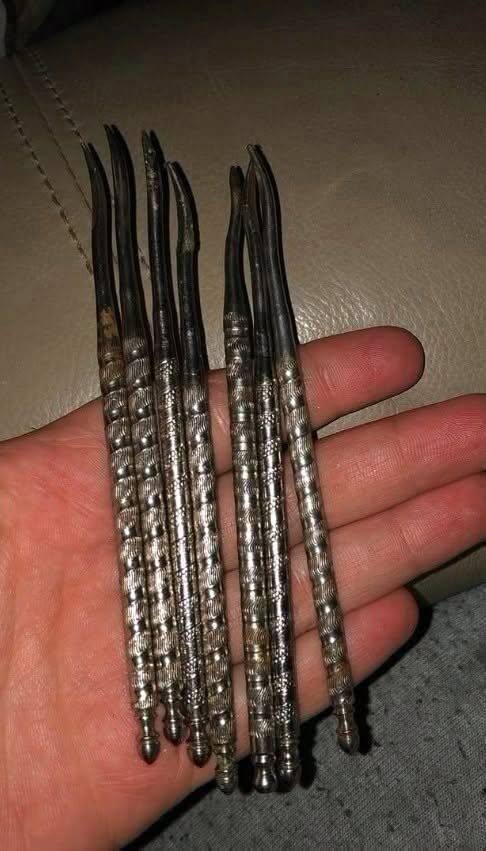
Retro household items found tucked away in family drawers frequently become viral mystery challenges across social media. The shared image displays a person holding a small, perforated blue plastic cylinder equipped with an integrated fold-over locking arm, with dozens of identical rods lined up in the background, paired with a classic clickbait caption: “I found this in Grandma’s drawer… but what is it? At first, these twisted pieces of plastic seemed like mere waste, until the truth came out. See the full story in the first comment below”.
While the post dramatically claims these are “mere waste” or a dark secret waiting to be revealed, they are actually classic vintage plastic perm rods (also known as cold wave rods) used for permanent hair waving.
Here is the history and practical function of these hair styling tools, why posts like this generate massive online clicks, and how to clean or repurpose retro perm rods:
1. The Problem: Manufactured Mystery Around Vintage Beauty Tools
Social media posts presenting mid-century grooming items as “unsolvable puzzles” rely on proven engagement strategies:
Dramatic Hyperbole (Clickbait): Describing standard hair rollers as “twisted pieces of plastic” or “mere waste” creates artificial intrigue to captivate readers.
Comment Farming: The prompt “See the full story in the first comment below” encourages users to open the thread, boosting the post’s algorithmic reach.
Generational Gaps: Because modern hair styling relies heavily on electric curling irons and wands, younger generations often do not recognize traditional heatless setting tools from the 1970s–1990s.
2. Explanation: What Were These Plastic Rods Actually Used For?
From a cosmetic and hair styling perspective, these perforated plastic rods were indispensable tools in 20th-century salons and home perm kits:
Creating Chemical Perms: Damp sections of hair were wrapped tightly around the central perforated barrel. The attached rigid arm (or elastic band) was then flipped over and snapped into place at the top to secure the curl under tension.
Function of the Perforations: The small holes along the tube allowed chemical wave lotions and neutralizing solutions to penetrate evenly into the core of the wrapped hair shaft.
Color-Coded Sizing: These rods were manufactured in specific color-coded diameters (e.g., blue, pink, white, yellow, green) to produce distinct curl patterns ranging from tight coils to soft waves.
3. Advice & Steps: How to Clean and Reuse Vintage Perm Rods
If you come across a set of classic plastic perm rods, you can easily use them for heatless hair styling by following these steps:
1. Thoroughly Clean and Sanitize
Soak the rods in warm water mixed with a few drops of clarifying shampoo or mild dish soap to remove old styling residue. Rinse thoroughly and sanitize with rubbing alcohol or dilute white vinegar before air drying.
2. Style Heatless Curls
On damp hair, apply a light leave-in conditioner or styling mousse. Wrap small sections of hair tightly around the cylinder, snap the locking arm closed, and allow your hair to air-dry completely (or sleep in them) for defined, heat-free curls.
3. Inspect Plastic Flexibility
Older plastic can become brittle over time. Test the hinges gently before wrapping to ensure the locking arms do not snap under pressure.
Disclaimer & Safety Guidelines
This article is provided for general educational, hair styling history, and media literacy purposes. Viral mystery challenges on social media often repurpose everyday vintage tools to generate web traffic. Do not apply professional chemical perming solutions at home without proper training, as misusing chemical perms can cause severe hair breakage or scalp burns.