Snake or Elephant? What This Optical Illusion Really Reveals
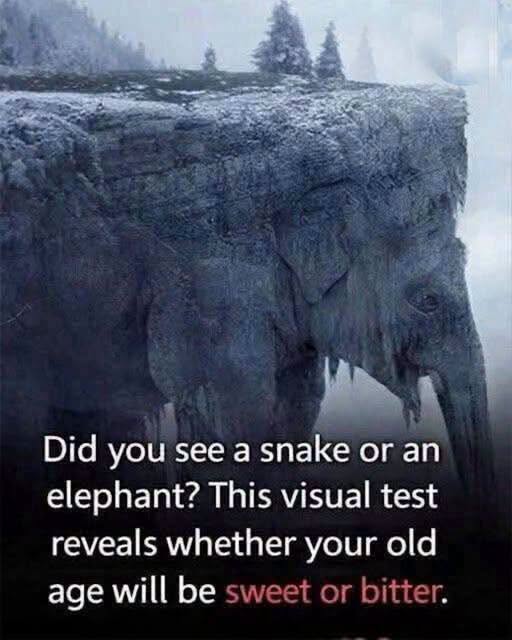
Have you ever looked at an image and noticed something completely different from what another person sees? This unusual optical illusion features an elephant-like shape that some viewers may also interpret as a snake. The accompanying viral claim suggests that your first impression can reveal whether your old age will be sweet or bitter.
But is there any truth behind this personality test?
What Do You See First: A Snake or an Elephant?
The image is designed to encourage viewers to interpret its shapes in different ways. Some people may focus on the elephant’s head, eye, and trunk, while others may notice shapes that resemble a snake or another creature.
Our brains constantly organize visual information, recognize familiar patterns, and fill in missing details. This process helps us understand the world quickly, but it can also lead different people to interpret the same picture differently.
If You See an Elephant
The elephant is the most obvious interpretation of the image. Its large body, visible eye, and long trunk create a recognizable outline.
In popular online quizzes, seeing an elephant may be associated with strength, patience, wisdom, or stability. These descriptions can be entertaining, but the image cannot establish that someone possesses these qualities.
If You See a Snake
Some viewers may interpret parts of the image as a snake because of the unusual shapes, shadows, and contours. Optical illusions can make familiar objects appear ambiguous, especially when the image is dark or visually complex.
Although social media quizzes sometimes attach personality traits to this interpretation, there is no scientific evidence that seeing a snake first predicts a person’s future, temperament, or experience of old age.
Can This Visual Test Predict Your Future?
No. There is no reliable scientific basis for claiming that your first impression of this image predicts whether your later years will be happy or difficult.
A person’s future well-being depends on many factors, including physical health, relationships, financial circumstances, personal choices, social support, and unexpected life events. A single picture cannot measure or forecast these influences.
Optical illusions can tell us something interesting about visual perception, but they are not validated tools for predicting personality or destiny.
Why Do People See Different Things in the Same Image?
Visual perception is influenced by attention, contrast, context, familiarity, and the way the brain processes shapes. When an image is ambiguous, different viewers may focus on different features and reach different interpretations.
Your first impression can be an interesting conversation starter, but it should not be treated as a psychological diagnosis or a prediction about your future.
So, What’s Your Answer?
Take another look at the image. Did you see a snake or an elephant first?
Share your answer in the comments and compare it with what your friends and family noticed. You may be surprised by how differently people interpret the same picture!
Remember: This is an entertaining optical illusion, not a scientifically proven test of personality or future happiness.