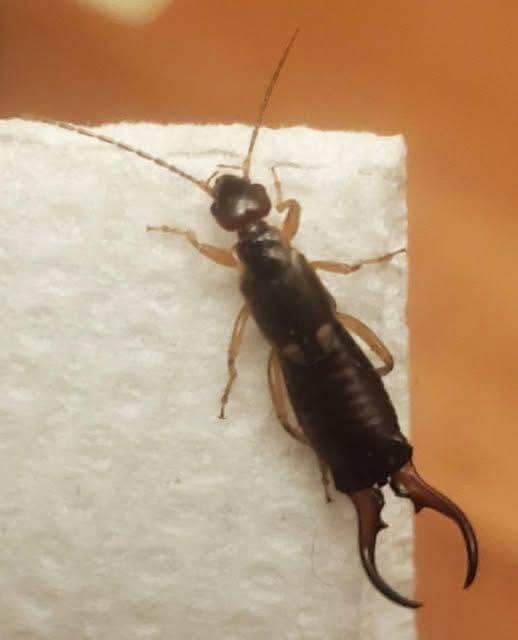
“My 6-Year-Old Daughter Got Bitten by This!” What Is This Terrifying Bug?
The insect in the photo looks frightening, especially because of those large pincers at the end of its body.
But despite its appearance, this is most likely an earwig — a common insect recognized by the forceps-like structures on its abdomen. 🐜
🪲 Does an Earwig Really Bite?
Not usually.
What people often call an “earwig bite” is actually a pinch from its rear pincers. Earwigs may pinch when they’re trapped, handled or pressed against someone’s skin.
The pinch can hurt and may occasionally leave a small red mark, but earwigs are not venomous and are generally considered harmless to people.
👧 What If a Child Was Pinched?
If the skin was broken, gently wash the area with soap and water and keep it clean.
Watch for increasing redness, swelling, pain or signs of infection. If the child develops a severe reaction or the injury looks unusual, seek medical advice.
🏠 Why Are They Showing Up in the House?
Earwigs prefer dark, damp places and are particularly active at night. They can enter homes through cracks, gaps around doors and windows, or other openings.
If you’re finding several around the house, check for:
💧 Excess moisture or leaks
🌿 Wet leaves and plant debris around the house
🪵 Wood piles or damp organic material
🚪 Gaps around doors and windows
🧱 Cracks near the foundation
Reducing moisture and sealing entry points can help keep them outside.
❌ And No, They Don’t Crawl Into Your Brain
The name “earwig” has contributed to an old myth that these insects crawl into people’s ears and burrow toward the brain.
That’s a myth. They don’t intentionally seek out human ears or lay eggs in people’s brains.
🔎 The Answer
The insect shown appears to be an earwig, probably one of the common species with prominent curved pincers.
It may look like a tiny monster, but it’s generally far less dangerous than its appearance suggests. 😅