Green Stuff Inside a Lobster: What Is It and Is It Safe to Eat?
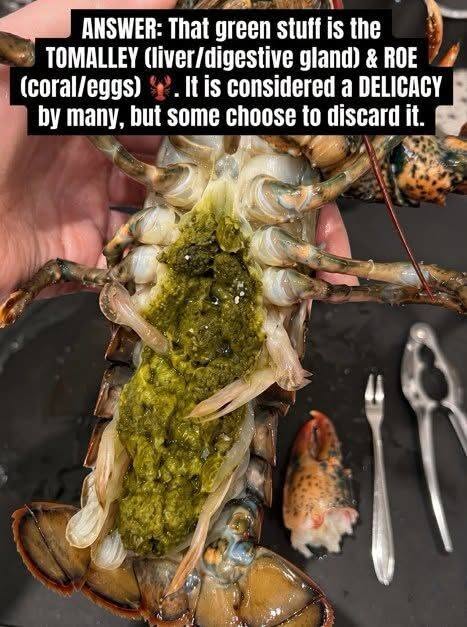
When cracking open a cooked lobster, finding a soft, olive-green paste inside the body cavity is a very common experience. While its appearance can be surprising, it is a completely natural part of the lobster’s anatomy: the tomalley (the lobster’s liver and digestive gland), which may sometimes be accompanied by roe (lobster eggs or coral).
Here is everything you need to know about what this green substance is, how it tastes, and the safety guidelines surrounding it:
1. What Exactly Is Lobster Tomalley?
The tomalley functions as both the liver and pancreas (digestive gland) for the lobster.
Digestive Role: This organ filters the lobster’s system and secretes digestive enzymes.
Color Change During Cooking: When the lobster is raw, the tomalley is dark. During the boiling or steaming process, heat transforms it into a distinct olive-green color with a soft, creamy texture.
Presence of Roe (Coral): In female lobsters, you may also find unfertilized eggs called roe or coral, which turn bright red or dark when cooked.
2. A Culinary Delicacy for Seafood Lovers
For many seafood enthusiasts, chefs, and gourmets, tomalley is considered a rich delicacy:
Concentrated Flavor: It offers a deeply savory, rich, and intense ocean flavor.
Culinary Uses: Many enjoy eating it straight from the shell, spreading it on crusty bread, or blending it into compound butter, sauces, and bisques.
Personal Preference: While it is prized by many, some diners simply prefer to discard it due to its strong taste or texture.
3. Health Precautions and Consumption Advice
While flavorful, tomalley should be consumed in moderation due to environmental health advisories:
Toxin Accumulation: Because the tomalley acts as a natural filtration organ, it can accumulate environmental toxins or red tide toxins (paralytic shellfish poison) if the lobster fed in affected waters.
Health Agency Guidelines: Food safety authorities generally advise against consuming large quantities of tomalley, particularly for pregnant women and young children.
The Bottom Line
Finding green tomalley inside your lobster is completely normal and expected. If you enjoy rich, concentrated seafood flavors, it is well worth a try; if you prefer not to eat it, simply scrape it away or rinse it off before enjoying the claw and tail meat.
Medical Disclaimer
This article is for informational purposes only and does not constitute formal medical or food safety advice. If you suspect food poisoning or experience an allergic reaction after eating seafood, seek medical attention immediately.