Scratches on Glasses? Don’t Waste Money on Viral DIY Tricks — Here’s What Really Works
Have you ever noticed annoying scratches on your eyeglasses and wondered whether you could make them disappear without buying a new pair? You’re not alone! Many people search for simple household solutions that promise to restore scratched lenses in just a few minutes.
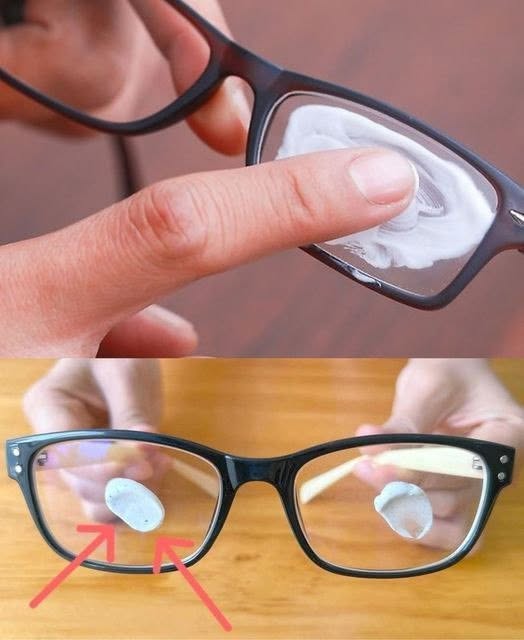
A viral image circulating online shows someone rubbing a white substance onto a pair of glasses, with the claim that applying a small amount will make scratches disappear instantly. It sounds like an easy and inexpensive solution, but is it really effective?
Before trying this popular trick, there are a few important things every glasses wearer should know.
Can You Really Remove Scratches From Glasses at Home?
The short answer is that a genuine scratch usually cannot be safely removed from prescription eyeglass lenses using household products.
Many viral posts recommend toothpaste, baking soda, car wax, or other polishing products. Although these methods may appear to improve the look of a lens in certain circumstances, they do not reliably restore the lens to its original condition.
Modern eyeglasses often have special coatings designed to reduce reflections, improve durability, filter ultraviolet light, or provide other optical benefits. Rubbing these lenses with abrasive materials can damage those coatings and leave the surface cloudy or uneven.
That means a small scratch could become a much bigger problem if you experiment with the wrong remedy.
Why Do Scratches Appear on Eyeglasses?
Even when you take good care of your glasses, everyday habits can gradually damage their lenses.
Common causes include:
Cleaning lenses with a shirt, tissue, or paper towel.
Wiping away dust or sand without rinsing the lenses first.
Keeping glasses loose in a handbag, backpack, or pocket.
Placing glasses face down on a table.
Storing glasses alongside keys, coins, or other hard objects.
Using unsuitable household cleaners.
Dropping glasses onto rough surfaces.
Although many lenses are marketed as scratch-resistant, that does not mean they are completely scratch-proof.
The First Step: Make Sure It Is Actually a Scratch
Sometimes, what looks like a scratch is simply dried water, fingerprints, grease, makeup, or residue from a cleaning product.
Before assuming your lenses are permanently damaged, try this safe cleaning method.
Wash your hands before handling the glasses.
Rinse both sides of the lenses with lukewarm water to remove loose dust.
Apply a small amount of lotion-free dishwashing liquid if suitable for your lenses.
Gently clean the lenses with your fingertips.
Rinse thoroughly.
Dry with a clean microfiber cloth designed for eyeglasses.
You can also use a lens-cleaning solution approved for your particular lenses.
If the mark disappears after cleaning, it was probably surface residue rather than a scratch. If it remains visible, the lens or its coating may be damaged.
Does Toothpaste Remove Scratches From Glasses?
Toothpaste is one of the most frequently recommended products in online scratch-removal videos.
The idea is that its polishing ingredients will smooth the lens surface and make the scratch disappear. However, toothpaste is not designed for optical lenses, and some formulations contain abrasive particles that can damage lens coatings.
Do not rub toothpaste onto prescription glasses to remove scratches. The method can make the lenses hazy, damage anti-reflective treatments, and create additional surface problems.
The same warning applies to many polishing compounds. A product that works on one material is not automatically suitable for precision optical lenses.
What About Baking Soda?
Another popular internet trick involves mixing baking soda with water to create a paste and rubbing it over the damaged area.
This is not a recommended solution. Baking soda is abrasive, and rubbing it against coated lenses can damage the surface or its treatments.
Even if a mark appears less noticeable immediately afterward, that does not prove the scratch has been repaired. The result may instead be caused by residue, altered reflections, or damage to the surrounding coating.
For expensive prescription glasses, experimenting with abrasive household products is an unnecessary risk.
Can Car Wax or Furniture Polish Hide Scratches?
Some online tutorials suggest applying wax or polish to fill scratches temporarily.
These products are not designed to restore prescription lenses. They may leave residue, create smears, reduce clarity, or interfere with lens coatings.
A product that makes a scratch less visible under one lighting condition may make the lens more difficult to see through in another.
For that reason, avoid car wax, furniture polish, metal polish, and similar products unless an optical professional specifically confirms that a product is suitable for your particular lenses.
What Is the Best Way to Fix Scratched Glasses?
The right solution depends on how severe the damage is.
1. Clean the lenses properly
If the problem is dirt, grease, or residue, gentle cleaning may restore the original clarity without damaging the lenses.
2. Ask an optician to inspect the damage
An optician can help determine whether the mark is a scratch, coating damage, or another problem. They can also check whether the affected lens can be replaced separately.
3. Replace the damaged lens if necessary
If the scratch interferes with your vision or the coating is badly damaged, replacing the affected lens is generally the most reliable solution. You may not need to purchase an entirely new frame.
4. Check your warranty
Some glasses come with a limited warranty or protection plan. Check your purchase documents or contact the optical shop to find out whether replacement is covered.
If the scratches are minor and do not interfere with your vision, you may not need immediate replacement. However, scratches that cause glare, distracting reflections, or blurred vision deserve professional attention.
How to Prevent Scratches in the Future
A few simple habits can help your glasses last longer.
Use a microfiber cloth: Keep a clean cloth specifically for your lenses.
Rinse before wiping: Remove dust and grit first to reduce the risk of scratching.
Store them in a hard case: Avoid leaving glasses loose in bags or pockets.
Keep lenses facing upward: Never place the lenses directly against a tabletop.
Use suitable cleaning products: Follow the care instructions provided by your optician or lens manufacturer.
Avoid extreme heat: High temperatures can damage certain lenses, coatings, and frames.
Handle glasses carefully: Hold them by the frame rather than pressing your fingers against the lenses.
These habits are more effective than relying on viral remedies after damage has already occurred.
Frequently Asked Questions
Can scratches on glasses disappear instantly?
A genuine scratch will not reliably disappear through ordinary household cleaning. If the mark is dirt or residue, proper cleaning may remove it. Actual lens damage generally requires professional assessment.
Will toothpaste make my glasses clearer?
Toothpaste may leave the lenses looking temporarily different, but it can damage coatings and create haze. It is not recommended for scratch removal.
Can scratched glasses damage my eyes?
A scratch on an eyeglass lens is not the same as an injury to the eye. However, damaged lenses can interfere with clear vision, create distracting glare, and make activities such as driving more difficult. Seek professional advice if the damage affects your sight.
Do I need to replace the entire pair of glasses?
Not necessarily. Depending on the frame and lens type, an optician may be able to replace only the damaged lens.
Are scratch-resistant lenses completely scratch-proof?
No. Scratch-resistant treatments can improve durability, but they cannot prevent every type of damage.
Final Thoughts
The viral claim that a little household product can make scratches on glasses disappear instantly may sound tempting, especially when replacement lenses can be expensive. However, there is no reliable DIY shortcut for restoring a genuinely scratched prescription lens.
Start by cleaning your glasses safely to rule out dirt and residue. If the scratch remains, avoid toothpaste, baking soda, and abrasive polishing products. An optician can help you decide whether the damage can be tolerated or whether replacing the affected lens is the better option.
The best way to save money is to protect your lenses before they become scratched—not to risk damaging them further with an unproven internet trick.
What Do You Think?
Have you ever tried a home remedy for scratched glasses? Did it work, or did it make the lenses look worse? Share your experience in the comments to help other readers avoid costly mistakes.