⚠️ WARNING: Can These Tablets Cause Blood Clots and Heart Attacks?
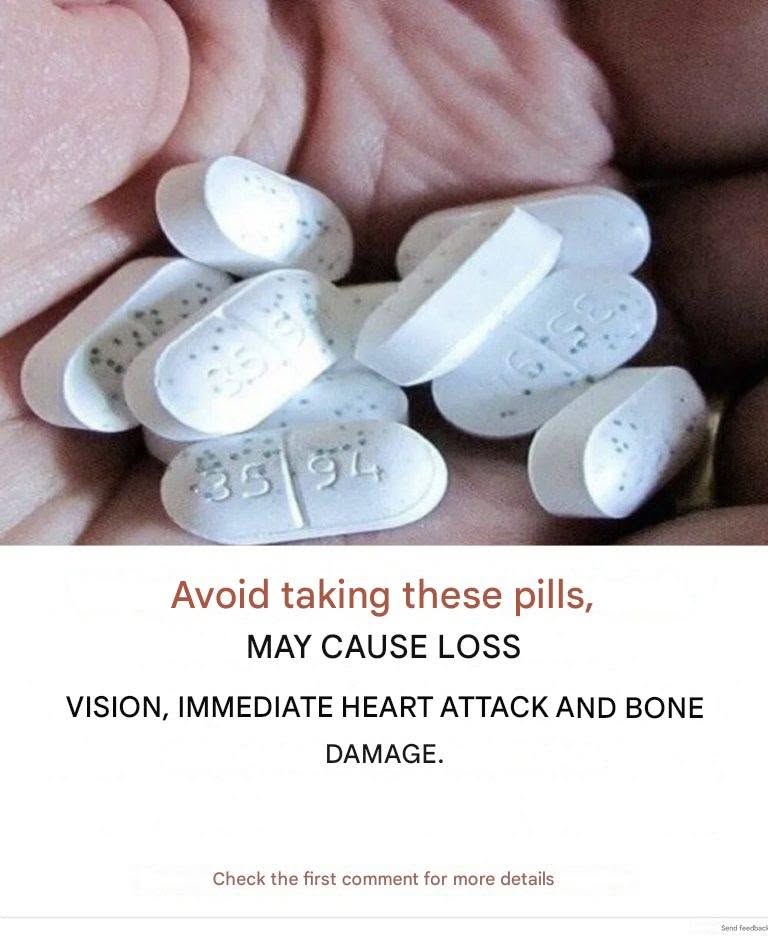
A viral image warns people to avoid the tablets shown because they supposedly cause blood clots, heart attacks, vision loss and bone damage.
That claim is far too broad.
The tablets in the photo cannot be reliably identified from the image alone, even though some of them appear to have an imprint. Medication identification should be based on the exact imprint, color, shape and packaging—not simply appearance.
💊 Some Painkillers Can Increase Cardiovascular Risk
Certain medicines called NSAIDs—including ibuprofen, naproxen and diclofenac—can increase the risk of serious cardiovascular events such as heart attack and stroke.
The risk can be higher with:
Higher doses
Longer treatment
Existing heart disease
High blood pressure
Other cardiovascular risk factors
This doesn’t mean these medicines are inherently dangerous or that everyone taking them will develop a blood clot. They can be useful medicines when taken appropriately.
❤️ What About Aspirin?
Aspirin is different.
It can actually reduce the risk of certain heart attacks and clot-related strokes in people for whom a doctor recommends it.
At the same time, aspirin can increase the risk of serious bleeding.
So taking aspirin—or stopping it—should depend on the individual’s medical situation.
👁️ What About Vision Loss and Bone Damage?
The viral image makes several different claims at once, but the photo does not establish that these tablets cause vision loss or bone damage.
Different medications have different side effects, and those effects cannot be determined simply by looking at a pill.
🚨 Never Stop a Prescription From a Viral Post
If you recognize a medication you currently take in this image, don’t stop taking it suddenly just because of the warning.
Stopping some medications abruptly can be dangerous, while others may be completely appropriate for your condition.
Instead, check the medication name and ask a pharmacist or doctor whether it is appropriate for you.
🔎 How to Identify an Unknown Pill
Look for the letters or numbers printed on both sides of the tablet, together with its color and shape.
A pharmacist can use this information to identify the medication much more reliably than a social-media photograph.
❤️ The Bottom Line
Some commonly used medicines, particularly certain NSAID painkillers, can increase cardiovascular risk, especially at higher doses or with prolonged use.
But there is no scientifically accurate rule saying “these tablets cause blood clots and heart attacks, so everyone should avoid them.”
Know the medicine before judging the medicine—and never stop prescribed treatment without professional advice.