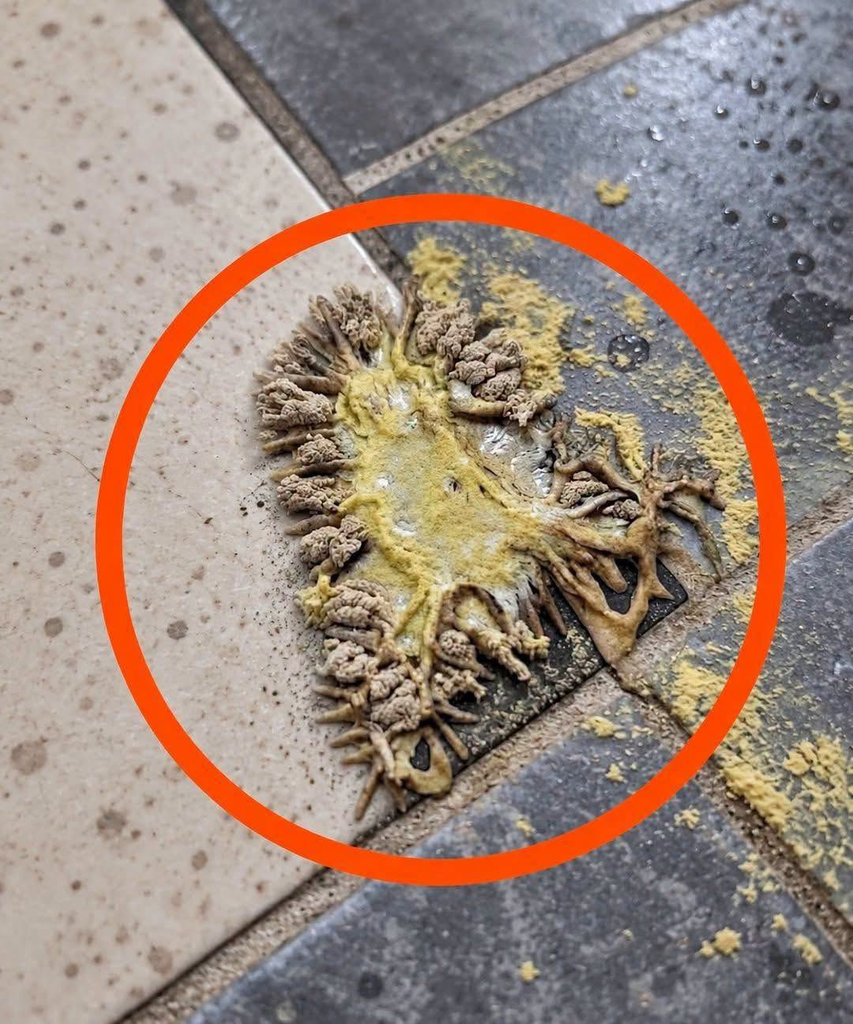
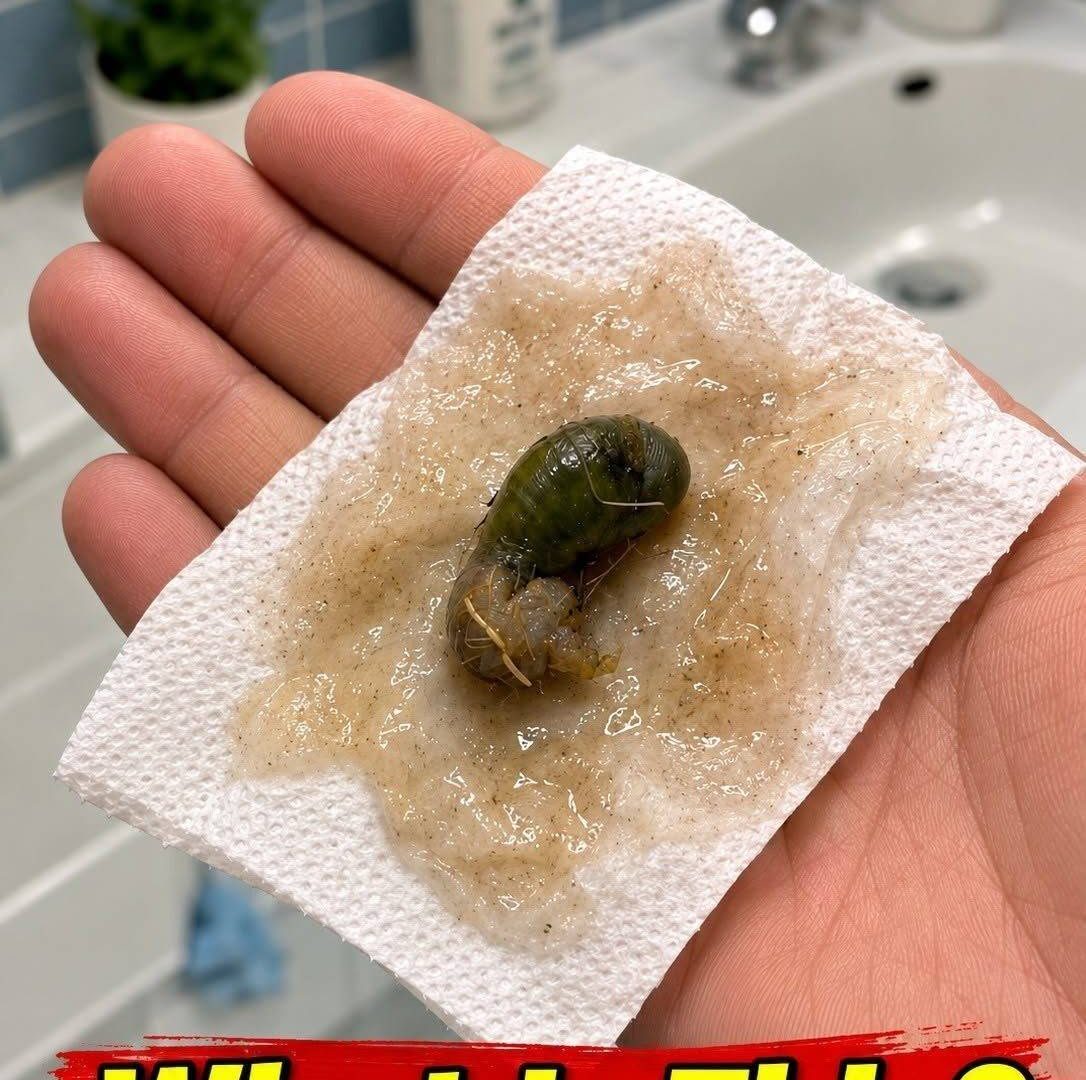
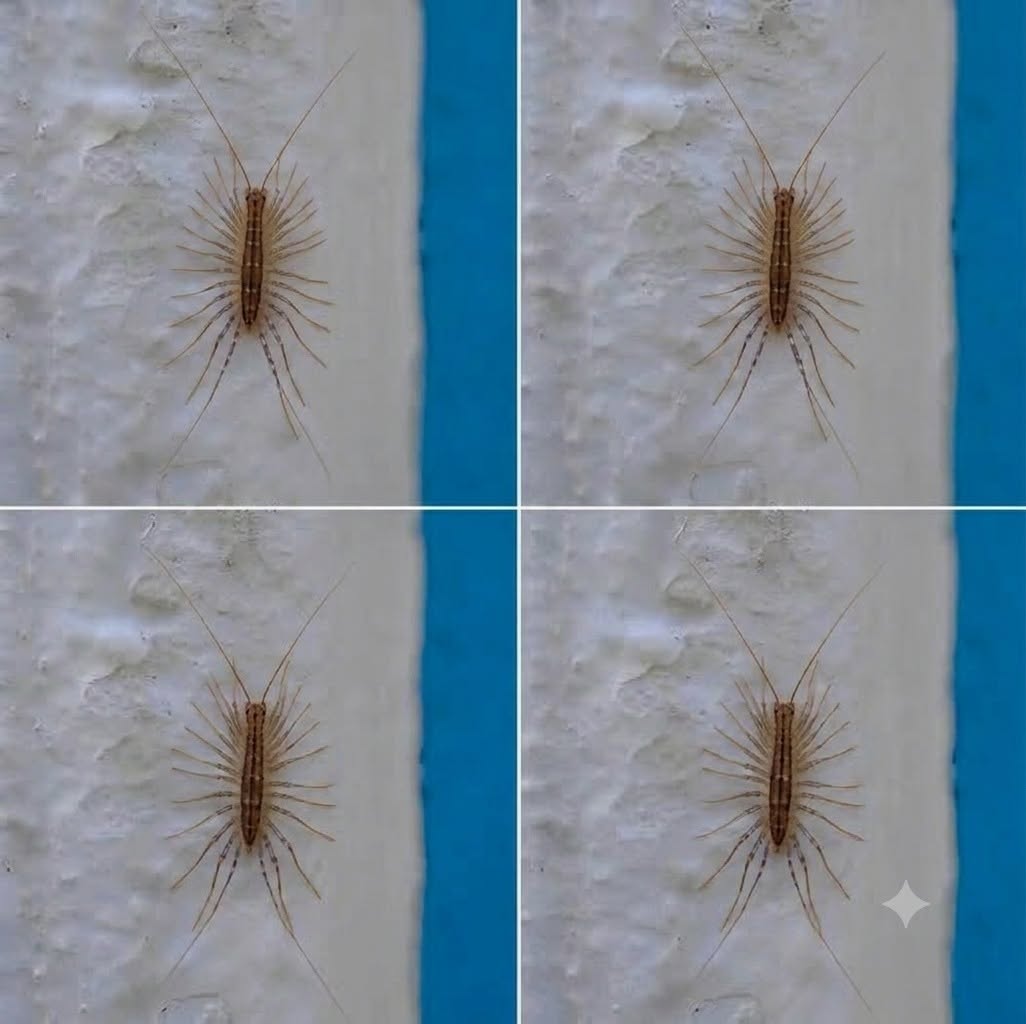
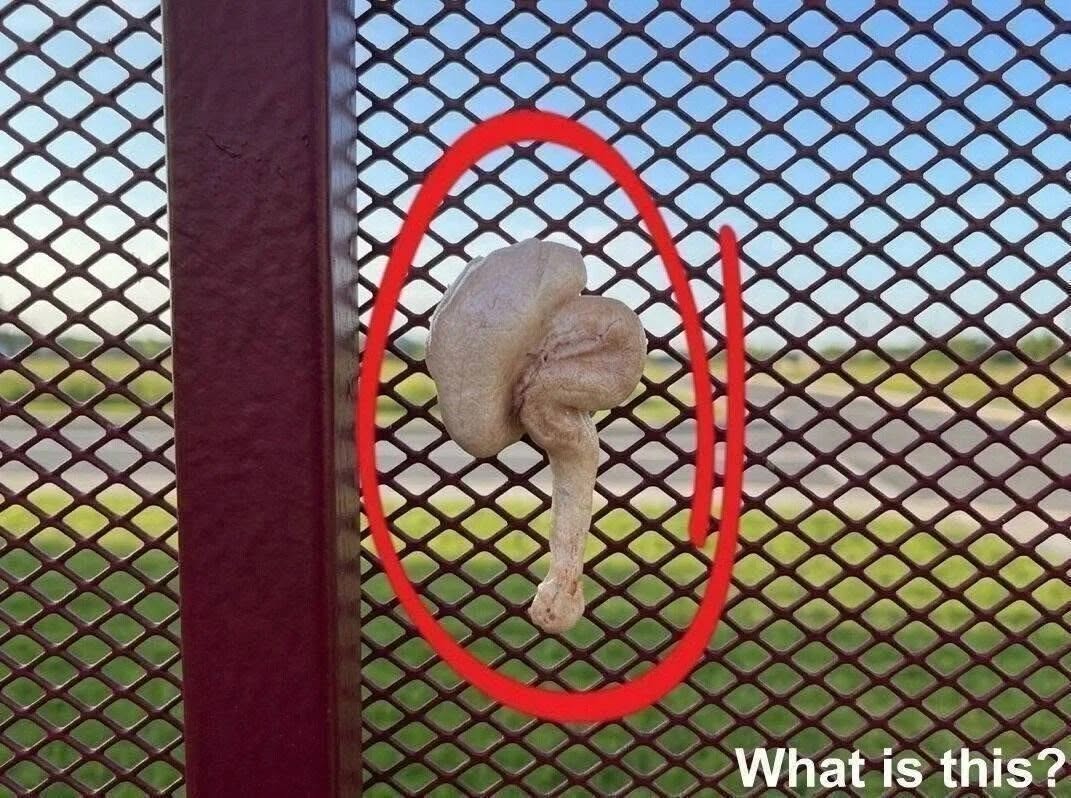
At first glance, it almost looks like some kind of sea creature, plant, or even a strange insect colony.
But if you found something like this growing on a bathroom floor, wall, or around a tile joint, the most likely explanation is much less mysterious:
🦠 It Appears to Be an Unusual Fungal Growth
The exact species cannot be identified reliably from this photograph alone, but the growth appears consistent with an advanced fungal/mold colony growing in a persistently damp area.
Bathrooms provide exactly the conditions fungi need: moisture, humidity, and organic material. Mold can grow on or around grout, wood, drywall, dust, and other materials when they stay damp. CDC
The strange branching, wrinkled structures in the photo may represent a fruiting or highly developed fungal growth, rather than an animal.
🤢 Why Does It Look Almost “Alive”?
Fungi can produce remarkably complex structures as they grow.
What we normally call “mold” is only the visible portion of a much larger fungal growth. Some fungi produce specialized structures that can look like tiny branches, fingers, coral, or flowers.
That’s why photographs like this can be extremely misleading.
It doesn’t mean there is an unknown creature living in the bathroom. 😅
💧 The Bigger Problem Is the Moisture
If something like this is actually growing in a bathroom, the important question isn’t just “What species is it?”
It’s:
“Why is this area staying wet?”
Persistent moisture can come from:
🚿 Poor bathroom ventilation
💧 A leaking pipe
🛁 Water getting underneath tiles
🚰 A leaking toilet or drain
💦 Persistent condensation
🧱 Water trapped behind walls or flooring
The EPA and CDC both emphasize that moisture control is the key to controlling indoor mold growth. US EPA
⚠️ Don’t Just Scrape It Away
If you encounter something this extensive, don’t immediately start scraping it with your bare hands.
Wear gloves and eye protection, keep the area ventilated, and avoid disturbing a large growth unnecessarily.
For a small amount of surface mold on a hard, nonporous surface, cleaning and completely drying the area may be sufficient. But if the growth is large, repeatedly returns, or appears to be coming from underneath tiles, walls, or flooring, the underlying moisture problem needs to be investigated. US EPA
And if the affected area is extensive, professional remediation may be appropriate.
🚨 One More Important Point
The photo doesn’t prove that this is a particular dangerous species or “toxic mold.”
Color and appearance alone cannot reliably tell you how hazardous a mold is. CDC guidance specifically notes that different molds can have many colors and that identifying the exact type isn’t necessary before addressing a moisture and mold problem. CDC
So the viral claim “this mysterious creature is growing in the bathroom” should be taken with a grain of salt.
It’s much more likely we’re looking at an unusual fungal growth encouraged by moisture.
👀 Would You Touch This?
Imagine walking into the bathroom at night and finding THIS growing beside the shower. 😂
Would you investigate it… or immediately leave the bathroom?