Hanging Towels on the Oven Door Handle: Hygiene Risks and Better Alternatives
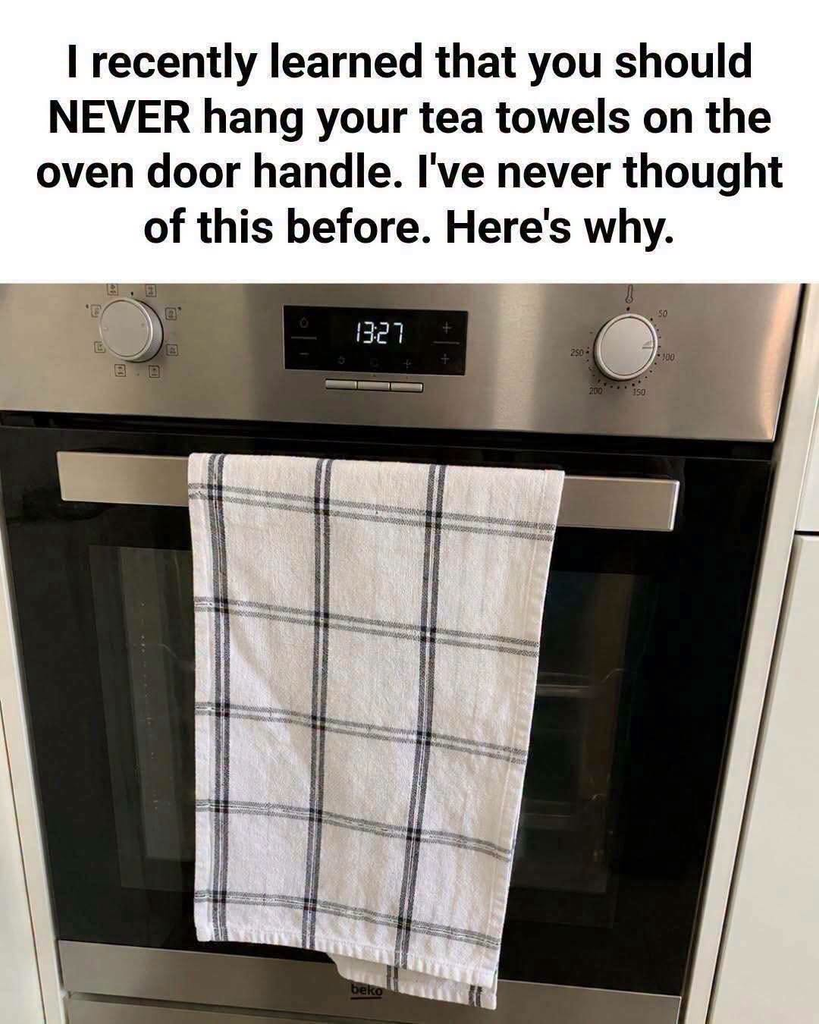
Hanging a tea towel or dishcloth over the oven door handle is a common habit in many kitchens. The viral graphic shows a towel draped on an oven door with the dramatic caption: “I recently learned that you should NEVER hang your tea towels on the oven door handle. I’ve never thought of this before. Here’s why.”.
While sensational headlines often exaggerate the danger, this practice poses genuine cross-contamination and hygiene concerns in the home.
Here is a detailed breakdown of the hygiene risks, along with practical tips for storing kitchen towels safely.
1. Why the Oven Handle Is Not an Ideal Spot for Towels
The central location of the oven in the cooking workflow exposes hanging towels to several risk factors:
High Risk of Cross-Contamination: Oven door handles are touched frequently with hands contaminated by raw meat juices, unwashed produce, or greasy utensils. Hanging a clean hand towel or dishcloth there transfers bacteria (such as Salmonella or E. coli) directly onto the fabric.
Warmth and Moisture Proliferation: Operating ovens generate heat and steam. When damp towels hang against warm surfaces, they create an ideal environment for bacterial growth and mold, which leads to sour odors.
Floor Contact and Dust: Depending on the towel’s length and oven placement, draped towels can brush against the floor or lower cabinets when opening the door, picking up dust and pet dander.
Minor Safety Hazards: Synthetic fabrics or loosely hanging towels near oven vents can obstruct heat release or come into contact with heating elements when opening a hot oven door.
2. Practical Advice: Where and How to Store Kitchen Towels
To maintain kitchen hygiene and prevent foodborne illnesses, follow these simple guidelines:
1. Separate Towel Uses
Keep one towel exclusively for drying clean hands and another for drying dishes or wiping countertops. Never mix their functions to avoid spreading bacteria.
2. Use a Dedicated Hanging Spot Away from Cooking Surfaces
Install hooks, a magnetic towel bar, or a dedicated rack on a side wall, near the sink, or on the side of a cabinet. This allows towels to dry quickly in open air without touching high-contamination surfaces.
3. Replace and Wash Towels Frequently
Swap out kitchen towels every 1 to 2 days, or immediately after handling raw meats. Wash them in hot water (at least 140°F / 60°C) to kill bacteria effectively.