What Are These Peculiar Vintage Silver Tools Found in Grandma’s Kitchen?
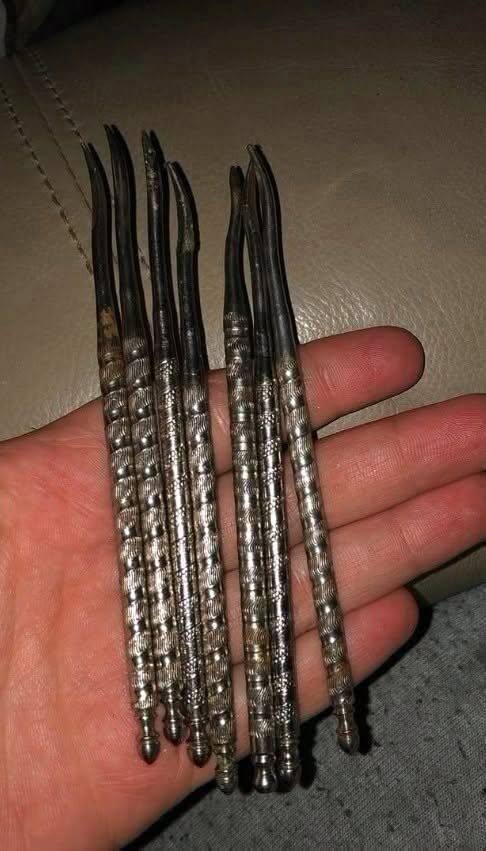
Inheriting antique kitchenware or vintage tableware often comes with a bit of mystery. Among the silver spoons, ornate serving trays, and crystal glassware, you might stumble upon long, thin, metallic tools with decorative twisted handles and curved, notched tips.
While many people mistake them for cocktail stirrers, hairpins, or fondue forks, these clever utensils actually serve a very specific dining purpose: they are vintage seafood picks (also commonly used as snail forks or nut picks).
The Mystery Solved: What Were They Used For?
These specialized dining tools were designed in the late 19th and mid-20th centuries during an era when dining etiquette required specific utensils for almost every course. Here is what they were made to do:
1. Extracting Crab and Lobster Meat
The primary function of these picks is for eating shellfish. The slender, tapered end allows diners to reach inside narrow crab legs and lobster claws. The small curved hook or two-pronged tip catches the delicate meat and slides it out without crushing it or making a mess.
2. Dining on Escargot (Snails)
In traditional European dining—particularly French cuisine—similar picks are used to pull cooked snails out of their shells cleanly and gracefully.
3. Picking Walnut and Pecan Kernels
Before pre-shelled nuts were widely sold in grocery stores, families bought whole nuts in their shells. After cracking the outer shell open with a nutcracker, these small picks were used to dig out the tight kernels trapped inside the inner crevices.
Design Features to Look For
If you find a set like this in a family heirloom box, notice these distinct design elements:
Spiral / Textured Handles: The decorative twisting or ribbed pattern along the handle isn’t just for looks. It provides a non-slip grip, which is essential when handling greasy foods or dipping seafood in melted butter.
Curved or Notched Tip: Unlike standard cocktail picks which are straight and sharp, seafood picks feature a slight bend at the tip to hook meat out of hard-to-reach shells.
Material: Most vintage sets were made from sterling silver, silver plate, or nickel silver. Over time, they develop a dark patina or tarnish that can easily be restored with silver polish.
Are They Worth Anything?
Vintage seafood and nut pick sets are popular collectibles among antique enthusiasts and hostesses who love retro dinner parties. Complete sets of six or twelve in good condition—especially those marked with sterling silver hallmarks—can hold solid value on secondary market sites like Etsy or eBay.
So, if you happen to find a set tucked away in an old cutlery chest, don’t throw them out! They make a wonderful conversation piece for your next seafood boil or charcuterie night.