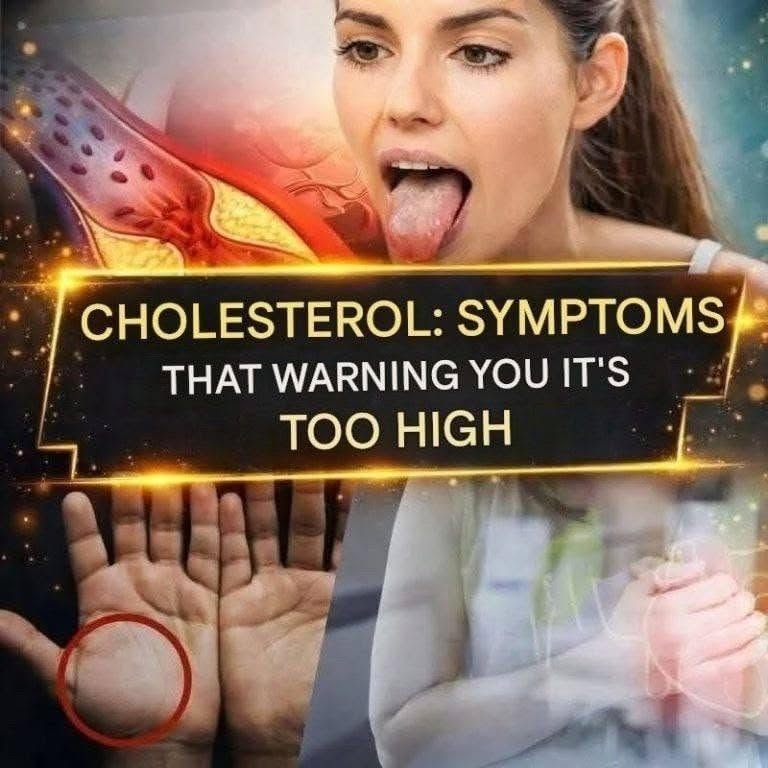
CHOLESTEROL: 5 “SYMPTOMS” THAT MAY WARN YOU IT’S TOO HIGH
High cholesterol is often called a “silent” condition because, in most cases, it causes no noticeable symptoms at all.
That means you can feel completely healthy while having elevated LDL cholesterol. The only reliable way to know your cholesterol level is through a blood test. CDC
So what about the signs shown in viral posts like this one?
1️⃣ Yellowish bumps or deposits on the skin
Some people with very high cholesterol—particularly those with familial hypercholesterolemia—can develop yellowish cholesterol deposits called xanthomas.
They may appear around the eyes, on the hands, elbows or tendons.
However, these deposits are not something that most people with high cholesterol develop. www.heart.org
2️⃣ A white or gray ring around the cornea
A ring around the outer edge of the cornea, called corneal arcus, can occur when cholesterol deposits accumulate in the eye.
It can be associated with inherited forms of extremely high cholesterol, especially when it appears at a young age.
But a ring around the cornea does not automatically mean your cholesterol is high. Age and other factors can also cause it. www.heart.org
3️⃣ Chest pain
This one needs an important clarification.
Chest pain is not a direct symptom of high cholesterol itself.
Instead, years of elevated LDL can contribute to plaque buildup inside arteries. If blood flow to the heart becomes restricted, it can cause angina (chest pain) or, in severe cases, a heart attack. CDC
🚨 New, severe or persistent chest pressure—especially with shortness of breath, sweating, nausea or pain spreading to the arm or jaw—requires urgent medical attention.
4️⃣ Pain or thickening around certain tendons
In people with familial hypercholesterolemia, cholesterol can accumulate in tendons, particularly around the Achilles tendon and sometimes the hands or elbows.
This is an important clue when it occurs alongside very high LDL levels or a strong family history of early heart disease. www.heart.org
5️⃣ Having no symptoms at all
Ironically, this is the most important “sign.”
You may have high cholesterol and feel perfectly normal.
There may be no headache, no dizziness, no unusual sensation and no obvious warning before cholesterol contributes to artery disease.
That’s why waiting for symptoms is not a good way to detect high cholesterol.
🩸 THE SIMPLE WAY TO FIND OUT
A lipid profile can measure important blood fats, including:
LDL cholesterol — often called “bad” cholesterol
HDL cholesterol — often called “good” cholesterol
Triglycerides
Total cholesterol
Your doctor can interpret these numbers based on your overall cardiovascular risk, family history and other health factors. www.heart.org
❤️ WHAT CAN HELP LOWER YOUR RISK?
Healthy habits can make a difference:
🥗 Choose a heart-healthy eating pattern 🚶 Stay physically active ⚖️ Maintain a healthy weight 🚭 Avoid tobacco 😴 Get adequate sleep 💊 Take prescribed cholesterol medication as directed
For some people, lifestyle changes alone aren’t enough, particularly with inherited forms of very high cholesterol, and medication may be necessary. www.heart.org
⚠️ THE BIGGEST MYTH
You cannot reliably tell that your cholesterol is high just by looking at your body or noticing a few symptoms.
The safest approach is simple: get your cholesterol checked rather than waiting for warning signs.